Pages

Friday, March 27, 2020

Wrong science and 3D masks

I've notice a constant downplaying of the crisis in the reported information coming in all directions, and Chris Martenson says that he has too.  He debunks the Oxford report which indicates that most people in the UK have already had Covid-19 and you need to watch his video if you don't already follow him.


Meanwhile, although millions of gloves and face masks etc have been sent out to the people in the frontline, those stocks are not going to last long.  And in any case, the countries who have done the best have not only had a policy of aggressive testing, but have also got the whole population wearing masks.  It's the only way to beat this thing.  Although, clearly, the UK government think they know better.

The media are catching up in the US with the fact that help is needed from the community to try to provide the protective equipment that nurses and doctors need.

I'm as angry as the next person that they have not commissioned tests from those who had the components ready and waiting, and now have commissioned a huge order of ventilators from Dyson, who have never made ventilators before.  And that the government didn't get the memo about the EU ordering for ventilators.

However, concentrating on what can WE do, rather than their shortcomings, there is now an additional role for all those people who have a 3d printer at home.  It is possible for us to print out the bands for face visors, and complete them using the plastic from plastic bottles.  The idea is already rolling out in the US and I see no reason why it shouldn't here.

Thursday, March 26, 2020

Do-it-yourself masks for NHS workers and your family

In the US there is a concerted effort to make masks for health workers, social workers and other people who are at risk and don't have access to proper surgical masks.

There isn't a similar campaign in the UK - yet.  But if Italy, which was rated the number 2 best health service in the world could have run out of protective face masks for staff, it is very possible for it to happen here.  Already there are stories that ambulance staff are only allowed four masks for a day, and that they are rationing one mask between two paramedics in some places, with the person dealing with a patient having the mask and the other paramedic having to keep six feet away from someone thought to be suffering from coronavirus.

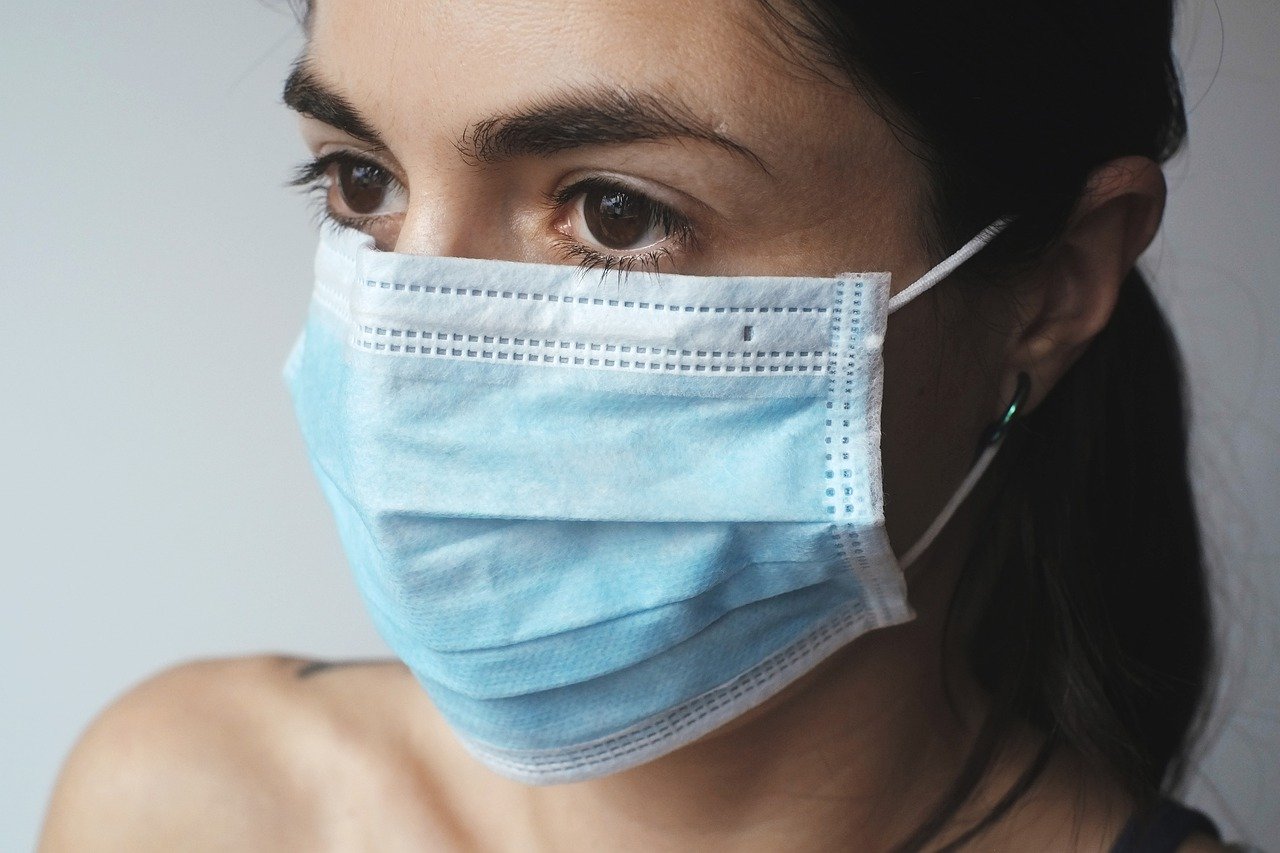
Let's be clear: these home-made masks are not as good as surgical masks.  The research shown on this page indicates that the sorts of material which allow for a breathable end result are about 60% effective, and surgical masks about 97% effective at blocking the virus.  But they are considerably better than nothing at all, and can be washed and changed to increase their effectiveness.

This page contains information including research about the best materials for making masks, which turn out to be 100% cotton pillowcases or cotton tshirts, for breathability and protection factors to be balance.  It is important to make the outer layer and inner layer a different colour and so someone can see immediately which is which.

This page includes a printable pattern for facemasks, with instructions for making them.  They are rectangular masks, with folds.  There are other designs which look more effective in terms of covering the nose and face, but they are made with different segments of fabric and I think (although I have no evidence) that these may be more porous and therefore less effective.  There is no good research with this design, which makes it difficult to know.

If you have any links to research, to patterns or have suggestions and guidance for less accomplished sewers, please comment or send me an email.  There are now a considerable number of groups on Facebook who are separated physically but banding together to make these for the hospitals and clinics in their area.  You may find information and support from them.  One example is Sewing masks for Atlanta hospitals (Covid-19).


Friday, March 20, 2020

Things to do while quarantined or self-isolating

Many people have been posting ideas of things to do while quarantined or self-isolating.

My first suggestion is with my family history hat on.  Remember how annoying it was when you found a picture of unknown ancestors in a box of photographs and didn't know who was who, because no one had labelled the photograph?  Yeah, well that's about to happen on a massive scale, because hardly any of us identify the digital photographs we take.  Take the time to sort photographs and identify the people appearing in them.

The second is with a view to the fact that we may be in this situation for months.  Why not start gardening?  Even if you only have a flat or balcony, you could be growing lettuce, herbs, maybe some tomatoes?  Bearing in mind that shops are being stripped of fruit and vegetables, if you have a larger space the most useful thing you could do is to plant some vegetables and make your garden productive.

The third is to adopt a local elderly person you can phone and keep their spirits up.

Ok, this list is growing, am reorganizing into subject headings

Archaeology
Course now free on archaeology.
Online course on forensic archaeology.

Creative
Affinity creative apps have given everyone a three month free trial - and they're half price if you want to buy them.  This is a great time to learn new software.

Lectures
Fancy a lecture?  Gresham College has 2500 lectures on a wide variety of subjects to educate you, on history, art, gardening, astronomy, pandemics... maybe give that last one a miss....

Plays
You can watch all the Globe productions on the Globe Player here.

Singing
You can join an online choir here with Gareth Malone - 15,000 people have already signed up.

Virtual tours
This page on travel and leisure.com has virtual tours of museums and parks.

This article in the Independent has links to tours of Rome.

I will add to this page as I find links and ideas.

Information sources

It's clear that there are good, bad and really terrible information sources in this current crisis affecting a large part of Europe and the rest of the world.  I'm going to try to keep this page updated with any I find that seem useful.

The public health England heat map of infections is here.  You can therefore see where the hot spots are, and the figures for infection in your region.

For an international overview, and sharing of information, the man I follow on the Peak Prosperity vlog is here.  He has been vlogging since the end of January and warned what was about to happen in UK and the USA.  I think he is a very good source of information; measured, well researched, not at all sensational.

The NHS website includes the information for what you should do.

I find the Guardian has a good mix of articles and updates. The have a rolling blog of information coming in from all over the world.  They also have a US and Australian edition of the paper.

So does the Independent. They also have a daily update of news you may have missed overnight.


Home-made masks

OK, I've done my whingeing.  We are where we are.  So I am going to use my blog to try to share information and tips for us all.  No use in saying "people affected by the Covid-19 crisis" because we all are.

This is a link to an article showing what materials make the best home made masks and giving information about how good they are at stopping infection.  Don't believe all the stuff about masks not working or making things worse.  YES they will make things worse if you constantly touch the mask while out, having touched other things.  NO they won't if you resist doing that. And make sure you wash your hands before and after taking off the mask.

We need to be resourceful and do whatever we can to keep ourselves and our families, but also the wider community safe. Hopefully this will help.

Protect yourself


It is been surreal this week, watching horror unfold in Italy and Spain, and seeing life continue more or less as normal in Market Rasen.  For weeks I've been shouting into the wind on Twitter, trying to get people in my country to realize how serious the situation is in Italy, and to understand that we are headed for exactly the same meltdown of our services if we don't react and act now.

I don't know if I would have done better to bombard my MP with more emails than I usually send, or to address my complaints and suggestions to the prime minister and his colleagues.  I can only say that it has been bizarre to be shouted at and told that the "experts" advising the government know more than I do, and to find out that was wrong, I was right.  What good does that do?

There is no doubt that I would prefer to have my drugs and doctoring done by experts, and I would not let Joe Bloggs loose on my body if I needed an operation of some sort, but sometimes a layperson can see what an expert requires too much evidence to believe quickly.  We had that example of Italy laid out in front of us, and yet experts modelled our behaviour and infection rate on an entirely different disease (viral pneumonia) and then were surprised that what was happening in real time in our country did not follow their models.

I am very concerned that along with draconian powers to close borders and control people's movements, there are clauses in the new powers that government are awarding themselves to curtail information and to punish people who whistleblow.  I completely understand the need to stop allowing people to sue the authorities if hard decisions have to be taken in the next few weeks about who to save and who to allow to die, but that should not mean that truth cannot be told.

We watched in horror last night on the television as truck after truck laden with dead bodies left the Lombardy area.  They cannot cope with the number of bodies they have for cremation.  Lines of coffins lying in churches.  Exhausted medics nursing their own colleagues, begging for protective equipment, valves for ventilators, ventilators. 

In Spain, it seems that the authorities did not react earlier because they wanted to keep the country open for the festivals which bring in a vast amount of tourism and money for the economy.  Many of the tourists apparently came from northern Italy, and so it is easy to guess that the economic decision which seemed justified a few weeks ago may turn out to be very costly in terms of lives lost and the boom which is about to hit their health system.

Meanwhile, people continue as normal.  A local pub, the White Swan, advertises on the local facebook groups that they are open as usual, but have separated the tables more, to avoid contagion.  I posted begging them to close - I cannot understand why Boris Johnson has not acted to close the restaurants, pubs and clubs and to force them to turn to take away and delivery options only.  It's going to cost lives, in the long run, and won't help businesses that are quickly going to be unable to afford to keep going even if they do that.

Finally, his reluctance to institute a universal income, is meaning that those who have already lost their jobs are despairing.  Half the population is carrying on as normal and wants to be able to collect rents, charge people for things, and the other half has already stopped behaving as normal, is doing their best to stay and home and is watching the other half play Russian roulette with everyone's lives.

I caught the broadcast of a podcast on BBC yesterday, Newscast, which I didn't even realize was a thing.  It's a filmed version, which is going out every weekday on BBC1 apparently.  It featured BBC journalists, including Laura Kuensberg, discussing the days developments, and interviews with a brave journalist in Italy reporting the army trucks leaving Lombardy because they are now overwhelmed with bodies as well as patients.

It was surprisingly informative.  But I still recommend you watch Chris Martenson on youtube.  He's been right for weeks, and is continuing to sum up what is happening around the world.

Monday, March 16, 2020

Like watching a slow-motion train crash

It has been obvious to me for some time that the Covid-19 crisis unfolding in Italy was likely to unfold in the same way here if we did not take the measures of social distancing that other countries have been taking.  Today the government announced that they are advising people to self isolate if anyone in their family has a high temperature or persistent cough, and that we should not gather in pubs, clubs and theatres.

They didn't do anything useful to those business owners like closing the pubs, clubs and theatres so that the owners could claim on insurance.  They just told us not to go there, ok?

It was after the press conference that people posted information on twitter that suggested the government's modelling team had been surprised by the speed with which this virus has spread.  It appears that they have used viral pneumonia in their models, rather than the known variables for Covid-19.  And surprise!  Their model didn't follow the pattern of infection that has been noticed in other countries.

They are now acting to add social distancing, but still not testing people in the community, in contravention of the advice from WHO, who say that testing and contact tracing are the only way to stop the virus.  They haven't closed the schools, saying that it is a mild illness in children.  Of course, those children will be free to infect everyone in their families as people appear to be asymptomatic when they are first infectious, a few days before they develop symptoms.

I had assumed the lack of testing was related to a lack of testing kits, and maybe this is the case.  It seems very strange then that a manufacturer of kits in England and northern Ireland (Novacyt) tweeted that he had the capability to make 3.5 million kits but hadn't had any orders placed by NHS England.

The people most in need of kits for testing are the nurses and doctors who are on the frontline for the treatment of the virus.  It was reported that nurses and doctors who fall ill are being asked to continue to work in some areas and self-isolate in others, without any testing unless they fell ill enough to warrant admission to hospital. 

This is not a sustainable choice.  Without testing, doctors and nurses will either be at home for 14 days unnecessarily, or working with patients and putting them and their friends and families at risk. 

That they are at risk is not under discussion, but the powers that be have recently downgraded the sort of protective equipment a nurse or doctor has to wear when dealing with Covid-19 patients, to what they have in the cupboard. A situation which people are very unhappy with.  And who could blame them.

The procurement procedures being followed at the moment are bizarre in the extreme.  The UK needs ventilators very urgently, and the government said that they had been discussing with Rolls Royce the possibility that they could turn their production lines over to making ventilators - an assertion that was denied on twitter and elsewhere by the company, who said the government had not talked to them. 

I fully expect to read soon that the leading UK manufacturer of ventilators hasn't been asked to supply any, so chaotic and inefficient is the story.

We should be producing hand sanitizer, protective equipment and masks, ventilators, testing kits in very large numbers NOW if we are going to be properly equipped for the catastrophic increase in numbers that can be expected after the disastrous handling of the crisis.  I am very worried that they have let the genie out of the bottle, and no amount of social distancing at this delay of time will put it back in the bottle.

They still haven't addressed the point that there are a lot of people in our society - the self-employed and those on low hours or zero hours contracts - who cannot afford to self-isolate, as instructed.  That there are people who live week to week on their wages and have no savings and nothing to fall back on. They definitely need to do something about that, so that people can afford to self-isolate, before the UK becomes Italy and we are overwhelmed.

They haven't shut schools, saying that children aren't at risk.  Their parents are, though, and their teachers.  And as they may be asymptomatic they will probably infect their parents who will then have to self isolate.  The delay in losing the workforce may not be very long, and it would be far better to close the schools and slow the spread even further.

Wednesday, March 11, 2020

Boiling frogs

As a genealogist, I've often wondered what it must have been like for my ancestors to have lived through the plagues which have cut a swathe through the population of this country from time to time.  We all have ancestors who did, of course, or we just wouldn't be here. I didn't think I'd live through a plague of the sort now raging in China and Italy and creeping across the world. But here it is.

Of course, our ancestors were reliant on word of mouth and local announcements for information, they had precious little science and very little information to go on.  The rich abandoned their London homes for the country, and left the poor to deal with the piles of bodies. 

I hadn't realized the impact of the most recent "plague", the 1918 flu pandemic, until very recently.  An article by the Smithsonian Institute about the impact of what was called the Spanish Flu (because the Spanish were the only country freely reporting its impact on their population) showed that people were in such fear of it that they dared not attend to the needs of children whose parents had died.

That flu hit the young hardest, where this flu is hitting the elderly and sick.  Spokespeople for the world health organization (WHO) and various governmental ministers around the world have left the impression that the main part of the population need not panic so much as the main fatalities were already old and sick.  Not very comforting for those of us who have high blood pressure, diabetes, or are over the age of 65. 

What is most bizarre for me is having contact with people all over the world in the virtual world, and seeing that locally people have no idea what is about to hit us.  Despite the internet, despite the reports on television, despite the anecdotal reports of ICUs so overwhelmed with patients that triage leaves those who are elderly or with significant health problems to die without intervention beyond some oxygen, people around me are so *not* panicking that life goes on as normal.  Except for a lack of loo paper supplies.

I try not to panic, but I do try to be prepared, and so I have listened to the accounts of those around me in the virtual world, and have read the newspaper reports and scholarly articles about combatting flu in the hope that I can come up with more than "wash your hands".

People *don't* wash their hands properly, something which is demonstrated on Twitter by someone with gloves and ink, and although people on Twitter immediately respond with "medical staff do", I'd say that having spent a considerable amount of time with family in hospital, surgeons may, but most doctors and nurses are no better at washing their hands than the general public.  Even if they are about to perform a so-called sterile procedure.

In the current crisis, people seem to be content to follow the advice of the government, even though there has been a chaotic mismanagement of the advice from the dial-in NHS service in the UK, and pretty poor advice from government health bodies in other countries.  It is natural that people don't panic until it is clear there is something to panic about.  I know the boiling frog analogy has been found to be false - frogs will jump out of pans of water once it gets too hot, they don't just sit there - it seems we are more or less the same, because we wait to see what everyone else will do, before we panic.

This is why it is far, far better for your health if you are going to have a collapse and drop to the ground, if you do it next to one first aider rather than a large crowd of people.  One person on their own will respond immediately.  A group of people will wait to see what everyone else does... and if no one rushed to help you, if they think you are drunk for example, instead of diabetic or having a stroke, they may just step over you and leave you on the ground.

I am acutely aware of the danger, having an estranged husband who is 70 and in poor health, and a son who is immune suppressed.  I have prepared as far as possible for what is to come with stocks of food and a lot of elderberry syrup.  But I fear that we are going to be as shocked as the Italians by the exponential growth of the virus.  As shown by this vlogger who usually reports on the markets, but has switched to Coronavirus for now.


Sunday, January 05, 2020

New Year, new thinking

Flooded field in Market Rasen
Bankers

Once, it was simple and easy to see
I had extra bulls and I needed poultry
you had extra chickens and needed a steak
A swap was the easiest way to partake

Someone invented the mint one fine day
Then we could use shiny coinage to pay
I paid you for chickens and sold Bert the beef
And you could buy oysters and prawns from the chief

Thus far it is easy to follow ye ken
I sell you real stuff, you can sell it again
I get a real coin with a value and know
That I can buy other stuff, quick cash and go

But here's what I don't understand any more
The way that it works seems wrong at the core
If I sell my house to a guy and his honey
They get a house and I get the money

But a lot of the markets alas and alack
They sell what they don't have and then buy it back
The banks got our money and some of our tax
And they're using that now to screw us to the max

I'd like to know who is in charge of this mess
The great machine clanks and the people have less
Though the world seems as bountiful as it did ever
The bonuses seem to reach my people never

F. Berry March 2013

Something has gone badly wrong with our economics system.  Farmers can't sell the wool they have, yet wool for a jumper costs more than a ready-made sweater from a shop.  Dairy farmers have gradually gone out of business, and more and more have taken a suicidal way out, when the price of milk has dropped. Meanwhile we have begun importing milk from other countries in the EU.

When talk of Brexit led to discussions about the things which might suddenly become scarce, we learned that we export 40% of our tomatoes... and meanwhile we import 40% of our tomatoes from the EU.  This just doesn't seem to make sense to me - I know that we have decided that the balance of goods out and goods in are an important part of our economic system, but that isn't laid down by some deity in the sky - it is something we can change.  And it seems to me that on the brink of leaving the EU, we should first be discussing whether it is a desirable thing to add miles of travel to the costs of basic items like tomatoes.  For the planet, it has to be a good thing for milk, tomatoes and meat to be grown locally to the places where they are consumed.

I think that one of the things which has gone wrong with our system is that we have allowed people to gamble on the outcome of crops and thus have divorced the cost of things from the actual value of them.  We have also not valued the sustainability of crops or good management in producing them. 

I think we need to stop arguing about whether global warming is man made or part of a natural cycle and recognize that whichever it is, our systems for manufacture, building housing and crop management needs to be realistic and to plan for the changes which may be to come.  We need to stop building housing where floods are likely to happen.  We need to start building to recognise the dangers of flooding in particular areas.

The Netherlands is under sea level in many places, and a system of dykes and flood management measures have kept the country safe from flooding for many years.  We could learn from that experience.

I think that physically, man is meant to be omnivorous, and there are some nurtients that are hard to obtain from a vegetarian or vegan diet, but that doesn't mean that I believe that our current system of industrial food production is good for us or our planet.  We need to return to a time when a very small amount of meat or fish went a long way, and the diet was mostly fruit and vegetables - and we need to find ways of promoting the production of more fruit and vegetables.  Meanwhile, the traditional orchards of England are being converted to wine production, and the land is being farmed out in many places.  We could learn from permaculture, and the innovative ways that food is being produced in inhospitable places - and producing a better and more bioactive soil.

We have politicians who barely look beyond next week, in a situation where we need to be planning for years, if not decades.  If this warming of the planet follows the mediaeval warming period (although experts agree we have already exceeded the maximum point) then it may go on for centuries.  We need to be looking to see what we need to change, and changing it, but currently that is unlikely to happen without pressure from ordinary people.

Our planet will sustain us, but we need to be clever with our resources.  My major argument against exhausting the petrochemical resources we have on our planet at present is not just that the pollution is causing harm and may be driving warming, or increasing it, but that our descendents, far into the future, may need petrochemicals for uses that we cannot even guess at.  Our great grandchildren may curse us for using so many plastics for ridiculous things, if they need the elements we have used for novelty toys and sock connectors. 

We already have a shortage of medical helium, while people are still filling party balloons.  Yes, it may be possible to harvest elements from other planets, but that's a long gamble.  We haven't even reached Mars yet.  And the cost is likely to be astronomical.

There is a tragedy in the way that we have been given a beautiful planet, with enough resources for everyone to have clean water, a home to live in and food to eat, and yet we have chosen to hoard resources and place power in the hands of a few people who now have a vested interest in making war and profitting from the weapons of war.  It's going to be a hard awakening when we find that we have ignored the real fight with the four elements, in order to fight endlessly with ourselves.

I'm going to finish this here.  Rant over.  I hope that you all have a happy and healthy new year, and all consider whether what you are doing, buying, working on, is consistent with love, and with your true self.  I know that isn't true for me, and I am going to work towards making it truer in 2020.

Saturday, July 13, 2019

Broken toes and broken hearts

I've got the angry stage in my grieving.  I was wondering if I ever would, I'm not an angry sort of person, don't get angry in circumstances where other people would, and tend to be the sort of person who tries to understand why other people behave as they do, rather than condemning them for it.  I'm not a saint, but I really think I don't have an angry sort of personality and I have always felt loved all my life, and that security helps.

This week I found a piece of music, Clouds by Solomon Gray.  It made me cry.


I was horseriding in Second Life, if you must know, and had the radio on for the sim I was traversing.  The horse would have had three broken legs and a broken neck in real life, as I kept falling off paths and crashing into trees, but Second Life is one of those places where horses are immortal, so I just continued on my way.


Suddenly this piece of music came on over the radio, and I was transfixed and then started crying.  I am a composer of music myself and listen to music a lot, but I have never had information conveyed so clearly by a piece of music.  It spoke of loss and love and very clearly to me expressed what I feel about losing Eelco.  I've been listening to it on repeat ever since - over headphones fortunately, so the neighbours are not being driven out of their minds.

It stirred up in me the loss that I feel, but also the frustration and resentment that I feel that I had no place in his life after death.  I wasn't his partner formally and we weren't married, and he didn't leave a will.  His pension was lost as he didn't nominate anyone to receive it.  None of it makes any difference, whatever happened he'd still be dead. I still have so many questions that will always be unanswered and I don't know what to do with them.  They are weighing me down and making me wonder if I really know what I had with Eelco.  I just have to give all that angry stuff to source and try to move on without him, without the answers, without all that future which we thought lay ahead, and didn't.

I have spent quite a lot of time in Second Life, horse riding, dancing at Marcel's, buying stuff.  It's my safe place at the moment, a place to forget and be entertained.  It seems a strange juxtaposition, spending time on things that are ostensibly so unimportant and trivial, while trying to deal with one of the biggest challenges that life throws at us, losing someone I loved dearly. I'm not sure whether it is helping or not.  I think the human connections I have in Second Life are helping, for sure.

I enjoyed riding around and finding picturesque places to ride.  I also went sailing in Second Life this week, staying until very late at Marcel's to join their weekly sailing trips.  I think a lot of the people who stay for the sailing are either in the US and therefore eight hours behind us, or in Spain and Portugal where a siesta in the afternoon allows them to stay up later.  Even so, it was very late by the time the cruise had finished.


I was amazed to find that sailing in Second Life is almost as complicated as sailing in real life, with the advantage that you don't get wet and won't get bonked on the head if you make a mistake with booms and sails.  The Captain was having to process waypoints for the route we were taking, information about wind speeds and direction as well as tacking and doing other nautical things with the boat. My routine hasn't quite caught up with that very late night, which is a pain, as Tizzy wants out early in the morning and so I am burning the candle at both ends as my grandmother used to say.

I started the Artist's Way a long time ago, it seems like years but is actually months.  I'm restarting where I left off and returning to writing my morning pages.  I feel I need to get some routine into my life, and start making my way back to the land of the living.  Maybe processing my anger will be a healthy thing to do.

A couple of days ago I pulled the shopping trolley (bag on wheels that old ladies have) into the house and then promptly walked into it and broke my little toe.  It hurt like buggery, but Kate buddy bandaged it for me and after a while the pain subsided.  I felt so stupid for doing such a ridiculous thing.  After all, I couldn't even blame someone else for putting it in a ridiculous place - I'd done it myself. My toe is black and blue but not as black and blue as I'd expected. 


Tuesday, June 11, 2019

Keeping out of the washroom

It's been some time since I posted on this blog.  I realised the other day that I tend to do most of my writing on Facebook nowadays, venting about the government, or about personal things to a limited audience of friends and online acquaintances.  There is a qualitative difference between blogging and posting to FB though.  With blogging, I have no expectation of anyone reading what I write, and no way of knowing who does, unless they comment.  With FB I know who I am writing for, and I tend to self-censor what I write.

I had a nasty experience a couple of days ago. I was going into my washroom with some food for the fridge. I should explain that my fridge and freezer are in the wash room along with my washing machine and tumble dryer and one hell of a lot of washing and cardboard boxes. To get to the washroom, I leave the kitchen by what was once the back door, turn into the lean-to conservatory which runs along the back of the house, to the door for the washroom.

Blue door to the washroom
In winter we keep that door closed, as the fridge and freezer start to misbehave if the temperature gets too low and the temperature is very low in the lean-to during winter months. I have a low level heater which kicks in if the temperature reaches freezing, but I don't want it to be attempting to heat the lean-to conservatory too. In summer it tends to be left open... as it was on that afternoon.

As I walked up the lean-to towards the entrance to the washroom, a movement caught my eye, and I watched a snake slither across the floor. My children have all accused me of potentially seeing things, or mistaking a wire for net curtains or a coat hanger for a snake. Believe me, I could hardly believe my eyes either, but it was a snake - or possibly a slow worm which is just a weaselly name for something indistinguishable from a snake - which was slithering over the floor. I turned tail and ran, noisily, and slammed all doors between me and it.

My son was as keen to try to catch the thing as I was, and so I called for help on the local community conservation group, of which I happen to be a member, and two kind people came round and tried to unearth the thing in the washroom.  They couldn't find it, thus cementing the idea in my children's minds that I was seeing things.

What on earth they made of the mess in the Washroom of piles of clothes I can't imagine.  My daughter moved in a few weeks ago and brought a massive number of things with her, including a mountain of clothing. There have been things chucked in the wash room over the past few months that no one knows what to do with, which has propagated into a heap of miscellaneous stuff, plus boxes and boxes of things which were supposed to make it into the attic above the washroom.

I haven't been in the washroom since. It's going to be difficult to do the things I normally do without going into it, but I can't face it at the moment. Which is a shame.  Cleaning out the washroom has been on my list of things to do for months, and the weather is so bad at the moment that it would have been something to spend a wet Tuesday doing.  No chance.

Monday, February 11, 2019

Time to create

Last Tuesday I started a course at the wonderful Bricktree Gallery in Caistor, called "Create some "me Time".  The course is run by Sara Scott, who has set up the Facebook page and group the above link leads to.

Due to my recent bereavements, I haven't felt like creating much recently.  Everything seemed trivial and pointless, and whereas I normally feel inspired to take up some sort of creative tools, I wasn't feeling it at all.  Tuesday changed that.  I met some lovely people, did a creative visualization and decorated a journal, and enjoyed feeling connected again.

Sara mentioned the book and creative course The Artist's Way which is by Julia Cameron and has been around for the past 25 years.  She had a copy with her, and so I leafed through it and was impressed by the fact that it is a spiritual way, and also with the number of testimonials from people who felt the book and its suggestions had changed their lives.

Money is a bit of a problem at the moment, but sometimes you just know that what is right is right.  I found a copy of the book for £6.50 on Ebay and bought it.  It arrived this morning.

I'd actually already read the first couple of chapters of the book online and while looking at Sara's copy, and so I started straight away with the Week 1 chapter.  There are a number of exercises to do.  The first is "morning pages" which means stream of consciousness journalling first thing in the morning, three pages at least.  Well, I've already been doing that since last Wednesday, as it was one of the things suggested by Sara, to do in our newly-decorated journals.  The second is Artist's dates.  She suggests taking $5 to the nearest five and dime shop and buying an unfeasibly large list of art materials with it, as a suggestion for an artist's date.  Well I suppose the book is 25 years old.  Maybe you could buy such a long list in the 1990s!

I took £5 to the nearest charity shop as the next best thing to a five and dime, and found a pure new wool sweater in beautiful colours of green and blue.  Yesterday I was reading about a woman from Estonia who designs and makes the most beautiful coats, using felted knitted materials and crochet etc.  I had decided that I would give that a go - 3D felting doesn't seem to be my forte, although I lost a bit of heart doing that because the dog got hold of my felting work and chewed up my first creations.

The idea of creating 2D art with felting and felted materials does appeal to me.  It seems to me it might be very forgiving, like oil painting and pastel drawing, in that you can always go over anything which doesn't work properly.  I've always liked crafts where you can layer and play with materials, and so although I don't think I will be able to make a coat any time soon, I think I may play with some smaller projects as a start.

The jumper was marked £3 and I ummed and ahed about the price of something I was really intending to destroy.  Eventually I decided to go with and told myself my art was worth it.  Arrived at the counter to find that all clothing is 50p today, and so it only cost me 50p.  a bargain!

I came home and put it straight into the washing machine on a high heat, and then once the machine had started, realized I was supposed to put it in a mesh bag to avoid clogging my machine with wool which has come off the jumper.  I stopped the machine, found a cushion cover that zips up and put the jumper in there, and then set the machine going again.

Tizzy and I went for a lovely walk.  About ten minutes walk away there is a dog walking field, which she loves.  It was beautifully sunny with hardly a cloud in the sky when we left, but once we reached the field the clouds were rolling in.  Being on the edge of the wolds, it is sometimes possible to see the edge of weather fronts, as they hit the edge of the wolds, which are rolling hills just outside Market Rasen.  There were a lot of seagulls wheeling around the field, making a lot of noise.  Often the arrival of  a lot of seagulls indicates rough weather is on the way, as they come inland from the coast to shelter.  We have had some very windy weather over the past few days, so maybe they've been sheltering from that.

I decorated my journal with a sunset over the sea, and as I walked I thought that maybe the colours and design of the jumper would lend itself to a similar design.  I think what I may start with are a number of square panels, and make patches, with a view to one day turning them into something bigger.

I love the sea.  I find it energizing and inspiring.  My sister has invited me to go and stay with her in Torquay which is a coastal town, and I am looking forward to that when I can.  for now I'm off to see what a hot wash at 90 degrees has done to a pure new wool jumper!


Thursday, January 17, 2019

Hands off my books: Tidying up with Marie Kondo

As a dedicated clutterer of houses, I've got a bit of a love-hate relationship with programmes which deal with housework.  I watch programmes about hoarding and feel generally positive about myself.  You don't have to tunnel your way to the sofa in my house, yay!  I watch programmes like Tidying Up with Marie Kondo and feel a guilty pleasure in knowing I'll never put her theories into practice in my house, while still hanging on her every word.

I've read about the Konmari method of tidying of course.  Various hilarious articles by fellow clutterers decrying the method with "I found none of my clothes or any of the vegetables sparked joy and so I threw them out and hid the credit card bill for the replacements from my husband in a lovely little box" etc. 

I was impressed by how much presence a tiny woman can have, and how connected she seemed to the houses, but not so much their occupants.  She advises people to deal with their clutter in several stages, starting with clothes.  Then you move onto books, then papers, then miscellaneous, then sentimental items. 

The problem is that the method ignores the fact that people live together and may not enjoy the things the others enjoy.  In the programme this didn't become a problem for any of them, as we didn't have one partner ranting about having to live with 500 milk bottles or 200 Barbie dolls, and everything seemed to suggest that the Konmari method was helping relationships by dealing with areas of dispute.  But it would be very interesting to see how the method works with a collector of things their partner hates.

I have to say that some of the people in the series have more current clothes piled on their beds than I have owned in my whole lifetime.  I'm down with the clothes sorting - I don't have that many.  Although I did understand one client who complained that although the item of clothing did not spark joy, it did fit, and that's more than most items did.  Like many women who have had a baby, she was waiting to be able to fit into her pre-pregnancy clothes, and kept her maternity clothes too, so she could have another baby.  Three wardrobes don't really fit into the spark-joy method of clothes sorting.

It is in the area of books and papers that I would have the most problems.  Marie Kondo advises keeping no more than 30 books, ideally.  I have hundreds, and I like my books.  As for papers, I love some and hate others, but I don't think the tax authorities will accept "It just doesn't spark joy for me" as an excuse for not doing my tax return.

I enjoyed the programme, mainly because I like people, and seeing into people's homes and lifestyles is always interesting for me. On the whole, the method does appear to work for the people featured in the programme, but then they've all asked for help.  I'd call for help if I saw her approaching down the garden path.  My clutter sparks joy for me, and I'm keeping it.


Sex education, American style

Having had a heavy cold, and not feeling like doing anything too intellectual, I decided to take my sneezes to the sofa and watch something on Netflix.  I chose Sex Education, which is a Netflix Original written and directed by an irritating collection of writers and two directors, with a creator credit to Laurie Nunn. 

The first thing to know about the series, is that it is played with an English accent in some sort of parallel world where all the worst things about American education appear to have been transported to England.  The place and even the time of the series is left undecided, with a very American house, American school, and American high school values and problems transported to an English cast with English accents.  It jarred with me, very much, tripping me up with the inconsistencies which really would not be typical of any English setting.

There's a certain Stepford Wives vibe about the high school too - one of the main characters wears black and looks a bit gothy, but the rest of the school's rentacrowd seems to have been put through a advert-style superwash, they're clean and tidy and very much not the sort of crowd one sees pouring out of colleges and schools in the UK.  

There are all sorts of things which make you go "WTF?" For example: one of the girls in the group which are part of the main story, lives in what seems to be essentially a stately home.  Is it likely that one of the people at this state high school would be living there, in England?  No, she'd be at the private school around the corner or some public school or at finishing school.  It's almost a trope of the US coming-of-age film that there should be a poor girl and a rich girl made to rub along together.  It's not one in English film making on the whole because it's untrue.  We've had a lot longer to delineate the sides of the tracks. If it had been set a couple of years later with a university crowd, the mixing of high income and low income families would have been more believable. 

However, I'm a Quaker, and we are asked to find new light wherever we may come across it.  The meaning of that has always seemed to be that no matter how wrong something may be generally, there may be a nugget of truth in it.  And so I kept watching to see if the nugget of truth might be there.  

It's had universally good reviews as far as I can see, and that relates to the performances of the main actors, and the fact that it seems Americans can recognize truths in the situations dealt within the series very readily.  But that makes me wonder why they didn't go the whole hog and set the thing in the USA?  Maybe the disconnect and annoyance I felt when watching was deliberately caused.  I'm not sure what the English setting added to the programme. 

I got over the constant tripping up over these things, but it meant for me that it could never seem truthful, because it's in this fantasy place where US-style education  has taken over England.  Even the house where Gillian Anderson lives looked American.  It may be that it tells a truth for some US people about their teenage years.  It can't be a universal truth, because it doesn't resonate with me at all, and I was a teenager, once! It doesn't seem to tell the truth about anything contemporary... all the people with sexual problems would be googling for dear life, not paying good money to sit in an abandoned toilet with a virgin teenager, no matter how talented.

I'm assuming it can only be good for another series, as English schools do not allow people to stay in high school indefinitely, and the actors are likely to grow up inconveniently and stop looking like teenagers.  Although most of them don't look like any teenagers I ever met, anyway.

New year, new start

I have not blogged for a long time on my personal blog.  2018 was a truly awful year for me, in which my estranged husband had a stroke and needed help, my mother fell ill and needed nursing and then died at the end of June, and my partner Eelco died at the end of November.  I wrote an obituary for him on my Caliandris Pendragon blog here.

It feels like I was never able to take the time to adjust to the previous shock before another came along.  The death of Eelco so suddenly and so young (he was 47) was so shocking I barely felt it for about a month, emotionally.  I've heard people say that they were numb after a death before; I never really knew what it meant.  I do now.

The impact of his death has come in the last couple of weeks, and I have begun to miss him dreadfully.  Although we spent a lot of time apart, I talked to him in the mornings, we texted during the day and then talked all evening, and so I probably spent more time "with" him than a lot of people who live together.  

Speaking to someone recently, I realized that I was thinking of my future as one enormous blank, because all my plans had involved him.  We planned to live together permanently once he was able to.  His father has been seriously ill for a long time, and had deteriorated recently, and so Eelco had been helping his parents at weekends, and was unable to visit and stay with me as often. 

It dawned on me during that conversation that I needed to sort out my future for myself, and not wait for the universe to sort it out for me.  I have allowed my blogs to fester for about a year, since I wasn't able to blog while looking after my husband (we'd been separated since 2010) and then my mother.  Since her death I hadn't really felt like it, and since Eelco's I haven't really felt like doing anything at all.  

I've had a cold the last couple of days and so I've been watching a lot of Netflix.  So I thought I'd start my reblogging with a couple of reviews of the shows I've been watching.

Sunday, October 15, 2017

In which I appear on Radio 4's feedback re home education

This week I was invited to the BBC studios at Lincoln to be interviewed by Roger Bolton for Feedback on Radio 4.  My reason for contacting feedback was that Winifrid Robinson had presented a programme called "Out of School, out of sight" for radio four which had been broadcast a few days earlier.  Depending on when you are reading this, you may still find it on the iplayer.

The programme started with an interview between Winifrid and a someone from the family who had withdrawn their children from school allegedly in order to home educate, who had told their family they were moving to Dubai, and had decamped to Syria.

For some reason, Winifrid believed that if the family had been registered, this would not have happened, ignoring the fact that when a child is deregistered from school the local authority is automatically notified by the school, and therefore is "registered" on a list of electively home educated children in that area.

Starting the programme with that case set the wholly negative tone of the programme from that point on.  The programme makers were definitely of the opinion that registration and inspection were the answer for children who were claimed to be home educated and clearly were not being home educated, in the face of its own evidence that this is not the case.

Two of the problem families, a mother struggling to home educate child who was threatened with a pupil referral unit if his attendance didn't improve, and a Jehovah's Witness man who had been home educated by his mother, were subject to regular inspections by the authorities... and yet this didn't appear to be helping or have helped.

Ignoring that, the programme went on to interview a couple of actual home educators, firing questions such as "What qualifications do you have to be a teacher?" at one poor woman, and spending some time on the continued breastfeeding of the other.  Neither of them appeared to have any problem with inspections or registration.

In fact, the styles of home education, the benefits of home education and the success stories of home education were not a part of this programme, which a BBC statement claimed was entirely commissioned to concentrate on the children slipping down the holes in the system, either because they were not being educated suitable to their age ability and aptitude, or because they had been opff-rolled by a school desperate not to have their results cluttering up their test scores.  However, as I told Roger Bolton on Feedback, this was not obvious from the programme and was not stated anywhere in the programme.  It was presented as though the freedoms that home educators rely on were the problem, and if these were withdrawn everything would be fine.

I feel it gave a very unbalanced and negative view of home education which was not in keeping with the ethos of the BBC, and should be rectified with another much longer programme studying the positive aspects of home education.  Or maybe that's a programme we will have to make ourselves.


Friday, September 08, 2017

Sceptics and cynics and fleas


I've had a real problem with fleas this year.  The dog has those spot-on drops usually, but she missed a dose while I was down south looking after my mother after her fall downstairs, and when I returned she was fairly covered in the jumpies.  It's been a bad year for fleas, and vacuuming, spraying the carpets and her bedding and washing everything helped but didn't eradicate the problem.

I've tried a number of commercial solutions, but I am highly sensitive to the commercial flea spray and developed eczema on my feet and eyelids, so was looking for something else and found recommendations from hundreds of people for diatomaceous earth.

I hadn't heard of it before, found a food-grade supplier and ordered some, which came today. It's a white powder with odd properties... it has a drying effect as it absorbs moisture and oil almost instantly.  I've read a number of sites which swear by it and say that it works like magic for fleas, but you have to be careful only to use a little as it tends to dry out the coat in animals.  I was worried about the prospect of Tizzy licking the stuff off her coat, but she doesn't seem inclined to do that and it's not harmful if she does.

In doing internet research on diatomaceous earth I found a lot of claims for a whole variety of health benefits for people, in ridding them of parasites, lowering cholesterol, and adding silica to the diet.  I looked for research, mainly aiming to establish its safety and the quantity required for a therapeutic dose, and came across a website denouncing its use in humans.

I read the article expecting to find some evidence to back up the claims of quackery, but found none.  This is one person's opinion that people cannot make claims for this substance because it hasn't been through clinical trials for this purpose, and denouncing those making any claims for it.  But actually, there seems to be little scientific evidence for or against it.

This is true of any number of natural substances which have been used by people for centuries.  And what angers me about this sort of "trust me, I'm a doctor" approach is that it is one person's opinion, and no more valid or backed up by science than someone who tells you that diatomaceous earth is good for ridding pets of fleas, or red mites.  It is backed up by anecdotal evidence, which is entirely dismissed by the scientific fraternity, although for many traditional remedies, that's all there is.

When drugs have been put through clinical testing, you can be sure that any harmful effects are recorded, and that the boundaries for safety of the substance has been established.  But do all people react to all substances alike?  Aren't some fatally allergic to peanuts while another will happily munch away at a bag of them unaffected?  Can science cater for the endless variety in people's reactions?  No.

The third leading cause of death in the US is inappropriate treatment or medication - medications which have been through clinical trials.  It must be the reason that when doctors go on strike, the death rate actually drops, instead of rising as one would expect.  Would I prefer that diatomaceous earth had been put through clinical trials?  YES.  Am I going to wait to use it until they happen?  NO.

Drug companies and those invested in medical research will not pay for medical trials of substances that can't be monetized by patenting.  For this reason I think there should be a research tax in the UK which could be used to fund research into commonly used substances.  When research was conducted into lavender oil, many of the traditional claims for the oil were substantiated.  And like diatomaceous earth, there were a lot of claims in many different directions.  I don't think I need to take the word of experts or laypeople... I am going to try it, and see what I think, the same way I might try a drug the doctor prescribes... although in that case I might read the patient leaflet and decide that I'd rather not, thanks.

Sunday, May 14, 2017

SAVE the NHS

I haven't blogged for a long time. However the upcoming election is making me feel very unhappy as so many people recently have said to me that they don't believe Jeremy Corbyn is capable of running the country. In the end, I don't think that's the issue.  The issue is, do we want the Conservatives to throw the NHS and all it stands for away?  I don't think we do.

Jeremy Corbyn's policies are what people should be looking at.  And the major item at a crossroads in this election is not Brexit but the NHS.  The tories have been starving the NHS of money in many ways at once.  They have made the NHS use commercial contracts for services which were traditionally provided by local hospitals, which in some cases seems to have replaced a working system with nothing at all.  People are complaining that having waited six months for a paediatric appointment they have been left in a no-man's land when Virgin healthcare have taken over the supply of services. 

Through the magic of corporate accounting, Virgin Care doesn't just make no profit, but actually makes a loss, and thus doesn't pay any tax in the UK.

The government are treating health services the way they are treated in the USA, as a commodity or a product, as though the long experience of dealing with a patient or trying different therapies with a consultant is worthless.

Taking contracts and money away from hospitals so that a service can be run by a for-profit company also takes money and flexibility away from hospital managers.

If you care about the NHS and its future as a free-for-all  health service you cannot vote Conservative.  That's all.

Wednesday, March 08, 2017

International Women's Day

I'm reminded by the Google Doodle that it's International Women's Day.  It's a day to be bombarded  by images of women doing amazing things, but it always makes me feel quite sad.  When I was at school in the 1970s we were definitely given the impression that being "just" a wife and mother was not a cromulant ambition for an intelligent woman, and I believed that.  I looked at my mother, who left her job when she was pregnant with me, and saw that women in her generation and those before her, had very little choice but to give up any career they'd begun for themselves, in order to stay at home.

I started work in the City as an industrial journalist, working on technical magazines, annual reports, and a staff magazine for Lloyd's Register of Shipping, more or less convinced that I would never want children.  I was the eldest of six, and knew all about the sleepless nights and mess and chaos which came with children, as I was almost old enough to be the parent of my youngest sister.

I married, and we were both agreed we wouldn't have children, but when my sister had her first baby I realized that being a mother wasn't just all the negative things I'd already experienced with my siblings - it was also unconditional love, and caring for the next generation.  An opportunity to bring up a child in love and nurture them.  Having brought myself to the point where I almost believed that I had no maternal instinct at all, seeing my sister with her baby awakened me.

It was another couple of years before I had my first baby, and I realized how much your own experience as a baby affected how well you are able to parent.  I began to have flashbacks of being a baby, and remembered trying to sleep with lights in my face and people talking loudly, feeling the backs of my legs cold when wrapped in a blanket... and those things informed my parenting.

I was definitely not an earth mother at first.  Even the night before my first baby was born, I was still thinking it might be practical to fetch my husband home to deal with dirty nappies.  Of course, all that was forgotten the moment he was born.  And I began to learn that what I had thought of as endless drudgery can be the most rewarding job you've ever done... it's all a matter of perspective.  I know that not all mothers fall in love with their babies, and not all mothers fall in love with all their babies, but I was lucky, and I did.  And I didn't find looking after them to be a brainless and unfulfilling occupation, but the best and most enjoyable work I ever did.

I can't help feeling that our society is discarding something valuable by trying to claim that men and women are equally capable of mothering children.  Millions of years of evolution, and the fact that our bodies are designed both for the having of the babies and the feeding of them once born, must offer some advantages mustn't it?  There are some women who are terrible at looking after children and some men that are brilliant at it, but on the whole, even in relationships where the tasks are shared evenly, the women have the edge.  When my mother worked in an old people's home for a while she told me that it was always their mothers that elderly people cried for, never their fathers.  If properly bonded in the first few hours of life, I believe that mothers have a bond with their babies that comes from nine months of being in the same body.

That's not to say that I think people can't love and nurture babies they haven't carried, I don't, I think the instinct to protect and nurture the young is there in everyone who had a loving upbringing.  It's harder to do though.  A woman who is allowed to bond properly with her baby in the first few hours of life doesn't have to make any effort or use logical argument to make her care for her baby, it's as natural as breathing.  Writing about this is making me uncomfortable, even though it is what I believe, because I fear to offend those who have adopted children or taken on stepchildren, which is more and more prevalent in our society, or for those who had post-natal depression and have struggled to bond with a baby.  I can't help feeling, though, that society would be a kinder and better place if we did recognize the damage that can be done to the mother-child relationship by interfering with the bonding process in childbirth and afterwards. 

I don't like the fact that feminists seem to disparage the work that women have traditionally done in the home and family as though it were worthless.  The view seems to be that only a moron or someone brainwashed by society or culture to think it is the only thing they can do, would ever want to be a full-time mother and housewife.  There has been a definite rise in the media of the attitude that women who want to be full time mothers are letting the side - and their children, especially their daughters - down.
But the original suffragettes weren't fighting for the right to be men and do those things which men had traditionally done.  They were fighting for recognition that the things traditionally done by women are worthwhile and of equal value.  Their campaigning for equality was not designed to make everyone work in a career, but to allow for the truth that our work, no matter where we do it and whether we are waged or unwaged, is of value to the family and to the country.

All that has been lost in the scramble for equal pay, and equal opportunity.  The net effect has been to devalue women's traditional work until it is seen as little better than being a road sweeper or loo attendant - the lowest of the low job. Women who want to do it are looked down on.  I was shocked when I realized that although I was the same person who worked in the city and organized two departments and six million pounds worth of printing, I too became someone who made people's eyes glaze over when I mentioned I was at home looking after a baby.  The implication is that you become a person of no interest to others the moment you stop work.  I even wrote to the Times to express that surprise, and received a lot of mail from women who felt the same.

I felt betrayed by the women and careers officers who guided me and gave me the impression that being a wife and mother isn't something worthwhile.  I fear that women today have no more choices than their grandmothers - where once they had to give up work, now they must work and have a career, whatever their own desire.  It seems to me that we have lost as much as we have gained, and that days like International Women's Day are designed to fire up girls to want to be astronauts or engineers, even if their dearest wish and natural talents mean that they want to stay at home and raise their own children.

I have a hope that the rise of transgender and multifaceted sexuality may one day mean that a person of any gender or none might be able to listen to their heart and follow their desire, whether that be for a wife/husband/civil partner and family or professional career, or dancing, or artistry, or hedge-trimming, or house building or genetics, and that society will begin to recognize that the nurturing of the next generation is not a cop-out for lazy people but a worthwhile job which brings rewards, not just for individuals, but for their families and society too.

There has been an immense amount of propaganda over the past century designed to manipulate the working population to provide what commerce and the war machine has required in terms of workforce.  Perhaps one day we will recognize the truth of what the suffragettes were fighting for and accord nurturing the children in a family the same status and reward as making armaments to kill them.

Thursday, January 26, 2017

What sort of a world do you want?

I've been thinking a lot over the past couple of weeks.  Being alone gives you a lot of time to think without interruption, and while Tom has been away I have been thinking a lot.  One of the things I had been thinking about was how stupid it is that our government is subjecting the ill and disabled to assessments and denying them the benefits they need, and that this is costing more than it used to when we relied on doctors and medically qualified people to do it and were less punitive.  So many news stories have been published recently about people dying shortly after they were assessed as fit for work.

I live in a mainly Conservative area, and I can't understand it!  The people here are lovely, kind and warm, and it seems impossible that they should support a party which is forcing families and the sick and disabled into abject poverty.  So this morning I printed out and stapled together a poster I have pasted to the big window in my house.


What sort of world do you want to live in?
One in which disabled and sick people are cared for by all of us?
Or every man for himself?

This government and the previous government have been systematically dismantling the welfare state

They are now subjecting disabled people and terminally ill people to long assessments and interviews and 40-page forms, and their new system is actually costing MORE money than simply paying the disabled and sick and accepting some people may be frauds.  Many people who need benefits are being denied them.

People on benefits are "sanctioned" which means removing all financial support and the right to free prescriptions etc, in order to meet targets set by the profit-making companies now in charge of these things.  It isn't only the people on benefits who are suffering, many of the employees of these companies are under extreme stress.

More people than ever before are on the streets, or admitted to
hospital with malnutrition.  Use of food banks has grown dramatically.

Not only do sanctions cost more to administer than they save, (National Audit Office) which means we're paying more to starve families than we did to feed them,  if we closed the loopholes which allow corporations and rich individuals to avoid paying a fair share of tax, that would gain £37 billion - more than we need to offer social care and support the NHS.

If you  agree with this, please write to your MP, and consider whether you want to support these changes in our country.

Is this the world you want for the future?
And now abideth faith, hope, charity, these three; but the greatest of these is charity. 
I believe that love requires us to act now.

I put a PS on the bottom to say that I am neither on benefits nor disabled, because I wanted people to understand that it wasn't my own self-interest which was driving me to take action, but a wish to help those who are being penalised by the crazily awful system we have in place.  Although there would be nothing wrong with someone who is on benefits or disabled writing such a thing, of course, they would be open to the accusation that they would feel that, wouldn't they?