I have now lost just over two stone on the intermittent fasting 5/2 diet. As you may remember, I started on the alternate day fast diet and lost no weight at all. When I switched to the 5/2 pattern I started to lose it slowly - around half to one pound a week.
I've been missing breakfast, having a light lunch and then eating a bowl of soupy vegetable noodles for an early dinner on my fasting days, usually Tuesday and Friday. I use one nest of noodles between the two of us (158 calories), some stock, and ribbons of carrot and courgette, usually, and spinach. I'm more or less used to this way of eating now, and don't find it anywhere near so hard as I did initially.
In fact, I find that I often fantasise about being able to eat things during fast days which I have no interest in eating when I get to my eat-anything day the following day. I feel immensely liberated by this style of eating - I appreciate my food more, I don't feel guilty on my eating days, and even when I came off the diet because I was ill, in January, I didn't pile back the weight I had lost - as I often have in the past with low calorie diets.
In fact my weight appeared to be stable, although I was making no attempt to restrict my eating.
I'm determined to carry on. The only downside that I can see is the possible requirement to replace my wardrobe frequently. I'm already two dress sizes down from last August.
Sunday, April 21, 2013


Verified authentic
Anyone doing family history online is aware of the tendency for wrong things to propagate on the internet. Someone makes a mistake, transposes a date or gets some detail wrong, and before you can say wha? the information has spread like wildfire.
There's a very irritating case which irks me from time to time. A man studying his wife's family ascribed my ancestor's older brother to someone for reasons I can't fathom. I know absolutely whose son he was, where he was born, where he lived etc.
I pointed out the error to the gentleman concerned and said I was willing to send him all the proofs he might want that the person he had down as his father was not his father. He sent me an email saying that he knew it was probably wrong, and would change it when he got round to it. About three years later I am still waiting for that to happen. Meanwhile, other people studying the same family have taken the information off this person's ancestry account and it is all over the place. Wrong.
I love Pinterest, the website that allows you to pin things you find interesting or want to remember. The great thing about it is that it retains the links to the original picture, and so if you click through the pinned picture, you will be taken to the website where the image was originally found. Except that some people don't seem to have understood the original intention, and have uploaded pictures again, so they lead nowhere. Or have pinned them from Imagr or Tumblr, where they had already been separated from their original position on the web and from any information about them.
There's a picture of a house crammed between two outcrops of rock on Pinterest. The link leads to a list of amazing places around the world, most of which are natural, not man made. And then it links to an image blog, which has no information except for the title... House between two worlds. On pinterest the title has changed to house between two rocks, and I have found dozens and dozens of pins and lots of lists online which include it. But I think it is actually a computer generated image, not a photograph of a real place.
It's getting to the point where it is possible to post things on Pinterest, and to find that things come full circle... posted on Pinterest, linked to by other websites, then used in blogs which quote pinterest as the source.
There's a very irritating case which irks me from time to time. A man studying his wife's family ascribed my ancestor's older brother to someone for reasons I can't fathom. I know absolutely whose son he was, where he was born, where he lived etc.
I pointed out the error to the gentleman concerned and said I was willing to send him all the proofs he might want that the person he had down as his father was not his father. He sent me an email saying that he knew it was probably wrong, and would change it when he got round to it. About three years later I am still waiting for that to happen. Meanwhile, other people studying the same family have taken the information off this person's ancestry account and it is all over the place. Wrong.
I love Pinterest, the website that allows you to pin things you find interesting or want to remember. The great thing about it is that it retains the links to the original picture, and so if you click through the pinned picture, you will be taken to the website where the image was originally found. Except that some people don't seem to have understood the original intention, and have uploaded pictures again, so they lead nowhere. Or have pinned them from Imagr or Tumblr, where they had already been separated from their original position on the web and from any information about them.
There's a picture of a house crammed between two outcrops of rock on Pinterest. The link leads to a list of amazing places around the world, most of which are natural, not man made. And then it links to an image blog, which has no information except for the title... House between two worlds. On pinterest the title has changed to house between two rocks, and I have found dozens and dozens of pins and lots of lists online which include it. But I think it is actually a computer generated image, not a photograph of a real place.
It's getting to the point where it is possible to post things on Pinterest, and to find that things come full circle... posted on Pinterest, linked to by other websites, then used in blogs which quote pinterest as the source.
Denying Christianity
When asked I don't say I am a Christian, because I have a certain idea in my head of what it means to be a Christian, and I don't even try to live by that ideal. I haven't sold my possessions, left my family and gone off to spread the word among the unbelievers. I haven't offered people who have tried to hurt me other ways of doing that, nor yet did I run after the people who stole my possessions from our car and offer them the things they missed. I don't spend my days in service to others.
I appreciate that we don't all have the same idea when you mention the word Christian. Some people see it as dependent on certain rituals, or attendance at particular churches, or a combination of ritual and attendance. Some would say that you can't be a Christian unless you have been born again and received a baptism.
The discussion about what it means to be Christian came to mind because I read a quote from James Beverley, Professor of Christian Thought and Ethics at Tyndale Seminary in Toronto, who says that Eckhart Tolle's worldview "is at odds with central Christian convictions" and that "Tolle denies the core of Christianity by claiming there is no ultimate distinction between humans and God and Jesus".
When I was a child I went to a Church of England Primary School and remember distinctly the irritation I felt when the Vicar or Curate would emphasise that Jesus was the son of God. I knew, always knew that we were all sons and daughters of God. I have come to know that we are all part of God, as God is part of us. And so I also do not see the division between Jesus, God, humans... it's all part of the oneness of All. And All are one. That division, is illusory, part of the confusion which arises from our place in the world of matter and of time.
We are facets of the same thing, part of God's attempt to know himself, and the clues are all there in the words which are reported from Jesus. He told us that when we did things for other people, we were doing them for him, or for God. He told us that the Kingdom of Heaven was within. He told us to love each other as we love ourselves.
The people who really deny the core of Christianity defend wars, starving children, placing a higher value on my life than the life of a child in Africa, or India. Spend money on bombs and armaments instead of food and drugs and safe water for our brothers and sisters in God. We live and let them die. The moment our governments and leaders stop denying the Christianity they purport to support, will be the end of War. The end of hunger. The end of treating people from other cultures or religions as though they matter less than we do.
We live in an abandant and beautiful world, with enough for everyone if we aren't greedy for more than our fair share, and yet there has never been time when things have worked that way. And we're the ones keeping it from working. If more of us were aware of the oneness of all - the essential lack of difference between me, you, that child dying from starvation and this fat capitalist... then maybe the world would begin to change. When we let go of our ambitions to be rich and famous, to shine beyond our small lives in ordinary towns... when we realise that it is those ambitions that keep others in slavery to produce the things we want... then we may gain the world.
I appreciate that we don't all have the same idea when you mention the word Christian. Some people see it as dependent on certain rituals, or attendance at particular churches, or a combination of ritual and attendance. Some would say that you can't be a Christian unless you have been born again and received a baptism.
The discussion about what it means to be Christian came to mind because I read a quote from James Beverley, Professor of Christian Thought and Ethics at Tyndale Seminary in Toronto, who says that Eckhart Tolle's worldview "is at odds with central Christian convictions" and that "Tolle denies the core of Christianity by claiming there is no ultimate distinction between humans and God and Jesus".
When I was a child I went to a Church of England Primary School and remember distinctly the irritation I felt when the Vicar or Curate would emphasise that Jesus was the son of God. I knew, always knew that we were all sons and daughters of God. I have come to know that we are all part of God, as God is part of us. And so I also do not see the division between Jesus, God, humans... it's all part of the oneness of All. And All are one. That division, is illusory, part of the confusion which arises from our place in the world of matter and of time.
We are facets of the same thing, part of God's attempt to know himself, and the clues are all there in the words which are reported from Jesus. He told us that when we did things for other people, we were doing them for him, or for God. He told us that the Kingdom of Heaven was within. He told us to love each other as we love ourselves.
The people who really deny the core of Christianity defend wars, starving children, placing a higher value on my life than the life of a child in Africa, or India. Spend money on bombs and armaments instead of food and drugs and safe water for our brothers and sisters in God. We live and let them die. The moment our governments and leaders stop denying the Christianity they purport to support, will be the end of War. The end of hunger. The end of treating people from other cultures or religions as though they matter less than we do.
We live in an abandant and beautiful world, with enough for everyone if we aren't greedy for more than our fair share, and yet there has never been time when things have worked that way. And we're the ones keeping it from working. If more of us were aware of the oneness of all - the essential lack of difference between me, you, that child dying from starvation and this fat capitalist... then maybe the world would begin to change. When we let go of our ambitions to be rich and famous, to shine beyond our small lives in ordinary towns... when we realise that it is those ambitions that keep others in slavery to produce the things we want... then we may gain the world.
Wednesday, April 03, 2013
Imagining feminism worked
The Guardian has been soliciting information from people who regard themselves as working class, about feminism. I don't know whether they have middle-classified the answers, but they sure don't sound working class. But then, no more do I. I have an extreme form of mixture in my mother's ancestry, with one line being more or less uniformly Norman ancestry, middle class, and the other with Anglo-Saxon ancestry and working class. Dirt poor working class, dying in the workhouse, dying with nothing to their names.
I read the Guardian all the time, although the pro-school vibe is a bit offputting, but then a large proportion of their readership seem to be teachers. They try to solicit working class views, but really, if you're reading the Guardian on a regular basis, you're halfway to the middle classes, whatever your background or financial status. It requires a certain sort of worldview before you can read it. Daily Mail readers hate the Guardian.
The article made me think though. A couple of days ago I visited the Joseph Rowntree Foundation webpage. I saw that their strapline was "Inspiring social change" and I know of their work through the quakers. But much of what I saw on the website was a meticulous recording of what is happening, a social commentary on the problems and the challenges that people face today, and very little vision or inspiration for changing it. Many of those sorts of charities spend their time fighting the things, the injustices that they see in the world, rather than presenting a vision of what it should be for the future.
It meshes with something else I have been wrestling with for myself. I don't remember how I started watching Bashar videos... I think it was through Educating Humanity, which is a website which reports on UFOs and the like. Bashar is apparently a channelled being from the future, who gives spiritual advice. The main crux of his advice is what my grandmother always told me: "To thine own self, be true". He says that we are in the world to be the best possible version of ourselves, and that every incarnation is unique and therefore has a mission to be the most like themselves that they can be.
I set aside all the questions about whether it is possible to channel other entities, and whether it is possible for people from the future to talk to today. I look only at the message... is it true? Does it work for me? Do I resonate with it? It's not a unique message, but it does have some unique detail. What he suggests we should do is to imagine for ourselves what world we would prefer to live in, and then pretend it exists. To engender in ourselves a vision of the world we would prefer and then to create it in feeling, in experience, in our minds, and know that it exists.
I don't know if the method of manifesting the future you prefer is an effective one, but it made me think about what I want, what world I prefer. And it made me wonder what is the obstacle to achieving it, what stops humankind from making a world without war, without want, without hunger, without illness and disease. What are we waiting for? We have all the resources we need to solve world hunger, to stop wars, to look after the people who need looking after. At present the UK seems to be going backwards as far as that is concerned, and for what? For money. This artificial construct that we developed in order to make barering easier has become something which controls governments, controls people and forces us into positions we don't want to take. Saving it, hoarding it, balancing the books, has become far more important than all the things it represents... the ability to move stuff around to the people who need it.
I see one of the challenges of the world today that it is in the grip of a very male approach to problems. There isn't enough of the female in our systems - and in fact the recent changes to the welfare system are making it less and less nurturing and caring and more and more punitive in approach. That isn't a good thing. A feminist approach, a feminine approach, would be to put the people first and the money second. To find ways of nurturing and caring for people, however little they are able to look after themselves. I am not talking about socialism, I am talking about tht human instinct to care for those who are unable to care for themelves, to make sure they are safe and well and looked after, and not to count the cost, the way you would if a broken or needy person was set in front of you.
I start to think of my vision of a feminist future, and if I were Queen of the world, I would ban the stick thin models from the cat walk and the pages of the magazines. I would put women on them, real women with curves and lumps and bumps in the wrong places, who are more beautiful than the stick thin boygirls they use today.
I'd make every woman buy a pair of flat shoes and confiscate the teetering high heels until they could run for a bus.
I'd close every massage parlour, every brothel, every spearmint rhino, every lap dancing club. I'd set up free community centres, with interesting programmes of talks and demonstrations on science, on flower arranging, on any damn thing that anyone was interested in.
In my feminist world, women would be free to stay at home or go to work. If they stayed at home they would be paid by the state to look after their children. Woman and men who commit violent and sexual offences would be held in prison until they were no longer a danger to others. Prison would be a town, walled in, but containing everything on the inside that is on the outside - shops and cafes and theatres and restaurants... and only those who proved unable to exist in such a place would be sent to anywhere more punitive.
I loved the model of home for old people which was upon those lines - a place which mimicked real life, it exists in the Netherlands. That place doesn't assume that someone with dementia will have forgotten everything they ever knew, and it allows them to continue to do the things they know how to do. I think prisons should be the same - we would be able to maintain prisons far better if we made them better places to be.
My ideas are unformed, and of course, completely impractical at present, but I do think that having a vision for the way you want things to be, the way you prefer them to be, is an important thing to have, otherwise everything becomes very negative. If you only ever know how you *don't* want things to be, it's a long and hard way towards a better future.
I read the Guardian all the time, although the pro-school vibe is a bit offputting, but then a large proportion of their readership seem to be teachers. They try to solicit working class views, but really, if you're reading the Guardian on a regular basis, you're halfway to the middle classes, whatever your background or financial status. It requires a certain sort of worldview before you can read it. Daily Mail readers hate the Guardian.
The article made me think though. A couple of days ago I visited the Joseph Rowntree Foundation webpage. I saw that their strapline was "Inspiring social change" and I know of their work through the quakers. But much of what I saw on the website was a meticulous recording of what is happening, a social commentary on the problems and the challenges that people face today, and very little vision or inspiration for changing it. Many of those sorts of charities spend their time fighting the things, the injustices that they see in the world, rather than presenting a vision of what it should be for the future.
It meshes with something else I have been wrestling with for myself. I don't remember how I started watching Bashar videos... I think it was through Educating Humanity, which is a website which reports on UFOs and the like. Bashar is apparently a channelled being from the future, who gives spiritual advice. The main crux of his advice is what my grandmother always told me: "To thine own self, be true". He says that we are in the world to be the best possible version of ourselves, and that every incarnation is unique and therefore has a mission to be the most like themselves that they can be.
I set aside all the questions about whether it is possible to channel other entities, and whether it is possible for people from the future to talk to today. I look only at the message... is it true? Does it work for me? Do I resonate with it? It's not a unique message, but it does have some unique detail. What he suggests we should do is to imagine for ourselves what world we would prefer to live in, and then pretend it exists. To engender in ourselves a vision of the world we would prefer and then to create it in feeling, in experience, in our minds, and know that it exists.
I don't know if the method of manifesting the future you prefer is an effective one, but it made me think about what I want, what world I prefer. And it made me wonder what is the obstacle to achieving it, what stops humankind from making a world without war, without want, without hunger, without illness and disease. What are we waiting for? We have all the resources we need to solve world hunger, to stop wars, to look after the people who need looking after. At present the UK seems to be going backwards as far as that is concerned, and for what? For money. This artificial construct that we developed in order to make barering easier has become something which controls governments, controls people and forces us into positions we don't want to take. Saving it, hoarding it, balancing the books, has become far more important than all the things it represents... the ability to move stuff around to the people who need it.
I see one of the challenges of the world today that it is in the grip of a very male approach to problems. There isn't enough of the female in our systems - and in fact the recent changes to the welfare system are making it less and less nurturing and caring and more and more punitive in approach. That isn't a good thing. A feminist approach, a feminine approach, would be to put the people first and the money second. To find ways of nurturing and caring for people, however little they are able to look after themselves. I am not talking about socialism, I am talking about tht human instinct to care for those who are unable to care for themelves, to make sure they are safe and well and looked after, and not to count the cost, the way you would if a broken or needy person was set in front of you.
I start to think of my vision of a feminist future, and if I were Queen of the world, I would ban the stick thin models from the cat walk and the pages of the magazines. I would put women on them, real women with curves and lumps and bumps in the wrong places, who are more beautiful than the stick thin boygirls they use today.
I'd make every woman buy a pair of flat shoes and confiscate the teetering high heels until they could run for a bus.
I'd close every massage parlour, every brothel, every spearmint rhino, every lap dancing club. I'd set up free community centres, with interesting programmes of talks and demonstrations on science, on flower arranging, on any damn thing that anyone was interested in.
In my feminist world, women would be free to stay at home or go to work. If they stayed at home they would be paid by the state to look after their children. Woman and men who commit violent and sexual offences would be held in prison until they were no longer a danger to others. Prison would be a town, walled in, but containing everything on the inside that is on the outside - shops and cafes and theatres and restaurants... and only those who proved unable to exist in such a place would be sent to anywhere more punitive.
I loved the model of home for old people which was upon those lines - a place which mimicked real life, it exists in the Netherlands. That place doesn't assume that someone with dementia will have forgotten everything they ever knew, and it allows them to continue to do the things they know how to do. I think prisons should be the same - we would be able to maintain prisons far better if we made them better places to be.
My ideas are unformed, and of course, completely impractical at present, but I do think that having a vision for the way you want things to be, the way you prefer them to be, is an important thing to have, otherwise everything becomes very negative. If you only ever know how you *don't* want things to be, it's a long and hard way towards a better future.
Wednesday, March 27, 2013
Suffering to be beautiful

Source: google.com viaLisa on Pinterest

I don't know whether I have mentioned it before, but I love Pinterest. I've pinned thousands of images, and find it much easier to remember things for which I have a visual reminder, rather than a bookmark. I love it... it feeds the collector in me, the hoarder, the window shopper and the child.
This morning I found that someone had started to follow my board on Bohemian clothing. I don't have a firm policy about what I include on that board - anything that takes my fancy goes into it, and it is an eclectic collection. There are a lot of Boho collectors on Pinterest, and I have an idea that many of them are harking back to their lost youth in the 60s and 70s, when they were young enough to wear the clothing.
I find that women go through a number of clothing ages through their lives. There's the stage in childhood and teens when you want to look a lot older than you are, but some things are too severe or shapeless and middle-aged to work on a young body. It must be admitted that the young can get away with almost anything, but too much bling or sophisticated detail detracts, rather than enhancing the way that they look.
Then there is a period in your twenties to forties when most women can get away with wearing most things. Almost any colour or style is suitable - well at least appropriate, even if not particularly flattering.
Unfortunately there comes a time, and I have reached it, when certain styles no longer seem right on a middle-aged woman, even if she isn't overweight and looking like a sack of potatoes like me. Puff sleeves, frilly hems, string straps, backless dresses, pale pastels tend to make you look as though you haven't realised you've grown older. There are some women who can carry them off, even at 55, but they are few and far between. The rest of us look ridiculous.
Then a strange thing happens. I'm not sure exactly what age it is, but around 70-75, suddenly you can wear the pastel frilly stuff again. There's never going to be a time again when backless or strapless is going to look good on you, but you can go back to the pastels and frilly and on an old lady they can look good. I don't know whether it is something about grey or lighter hair etc... it just starts to look ok. I suppose once you are past 70, unless you are a very unusual woman, or have spent a fortune on facelifts, there is little chance that anyone will think you are trying to look like a young woman again.
I've veered completely away from my point. In the mornings, I tend to flip through the emails I've received from Pinterest telling me that people have repinned the things I have pinned, and I look at their boards in turn. The board I visited this morning was for someone who had a board "Shoes I can actually wear". I reconized a kindred spirit, unable to wear anything but flat shoes, and looking for more interesting choices for those. I moseyed around her boards to see what else she had, which is very like being able to search through some stranger's junk drawer or photo album, and reward enough in itself for the time spent... something very few men will understand... and found she had another board..."Shoes I couldn't possibly wear, but would love to".
The board was covered in the high heels that every actress seems to wear on the red carpet nowadays. And it occurred to me that in years to come, people may regard these as inhumane as the tightly-laced corset or binding the feet of children. Don't get me wrong... I love high heels, and used to wear them. But my idea of a high heel is a three inch heel that I used to wear on high days and holidays, not the five or seven or nine inch monstrosities that are common nowadays.
It made me wonder once again whose standard of beautiful we are adopting, and why. And what message we are sending to the girls who are growing up now, who see actresses and models walking around in these things, mostly designed by men, and want to be like them. The foot is held in an unnatural position, the balance and structure of the skeleton is undermined by these things. Women will say that they dress for themselves and to please themselves, but even if my bad back didn't prevent me from ever wearing these shoes, I don't think I would wear them. I am too used to being able to move freely, being able to run when required, being able to balance my body and walk as far as I want to without feeling that someone has set the balls of my feet on fire. The thin models of the catwalk are not the way most women are, nor yet the ideal of most men. Most of them prefer real women with curves... indeed we are evolved to prefer that to the other. I do not understand why we have given our power away to mostly elderly men, certainly often homosexual men who seem to prefer androgynous models that look like adolescent boys rather than grown women. Why have we allowed the magazine editors and fashion pundits to tell us what is beautiful? I don't really agree with their vision of beauty... Nigella Lawson, Marilyn Monroe, Sophia Loren, Sophie Dahl before she got really thin... those are my ideals of beauty. And none of them could be mistaken for a boy.
I see people around me suffering to try to stagger around in impossible shoes, to diet into impossible clothes, and to balance their ideal of stick thinness with the reality of their bodies. I want a different, diverse, standard of beauty and fashion which includes us all - the naturally thin, slim, fat and obese. That recognizes us as people who want to look the best we can. Even the ugliest person wants to be able to look good, to be admired and liked ... why shouldn't every one of us be included in that? why should we be excluded because of our age or size? We want fashion that takes account of our anatomy and doesn't expect that we will learn a whole new way of walking to accommodate the highest of red-soled heels.
I think that's also what is going on with women who pin to Pinterest. They want a world in which they can find clothes and shoes they like, and which like them and their bodies - not the pristine skinny ideal which is presented in magazines the world over. I want a world in which people feel comfortable being themselves, whatever shape that is, and which tries to make the best of that.
And ANOTHER thing. I've already blogged the unavailability of stripey woollen tights for plus size women. It seems to me that there is something awry with supply and demand if there is a proven demand for something that isn't being produced. It undermines my faith in the idea that this mechanism works within our system at all. I've talked to any number of women who feel that the clothing shops cater for young women and don't stock anything that they like or want to wear.
I find this is a particular problem for plus size women of that certain age between 50 and 70 when they have to be careful not to look odd. Look in the shops for summer dresses - nearly all of them are in man-made fabrics, and nearly all of them are sleeveless. Even women who have kept themselves in shape may begin to get a bit self conscious about having their bare arms on display, and it is a pain to have to wear a cardigan or shrug on a hot day in summer. Sleeves would solve this problem, but very few of the summer dresses have them.
I have a dream of finding a cotton lawn summer dress all floaty and beautiful, which reaches down to my feet, and has sleeves. Of finding that the tops and blouses in the shops reach down to cover my bottom, and are in natural fabrics in plain colours, and not in manmade fabrics with complex patterns. Of finding someone making affordable shoes in beautiful leathers, with flat heels, feminine and comfortable.
I don't think I'm alone. I don't think it is too much to ask. I'd like to understand why it isn't happening.
Monday, March 25, 2013
TED compared to Scientology Summer Camp....
You know, I've always quite liked people who treat other people, however exalted their position, as ordinary people. But the inside view on TED which Eddie Huang has just granted us makes them sound demented.
He explains to the JRE show that on top of making his presentation to the conference, he was expected to attend all the meet-and-greet events for 12-16 hours a day - and when he sloped off to make a podcast, they took his TED fellowship away from him.
That's bad enough, but the power-crazed ones in charge of the conference refused to let him pay for his own hotel in order that he shouldn't have to room with a stranger. When he wanted to spend his birthday, which happened to fall inside the TED week, with his girl, they said no.
Frankly, I've enjoyed TED talks and I have recomended them to many people, but this is starting to leave a nasty taste in my mouth. They don't pay their speakers, expect them to attend everything every day for a week, and room them in bad hotels with strangers. What in hell is the $16 million they reap in attendance fees going to, then? Oh sorry - probably it funds their secretive anonymous scientific board?
I'm beginning to thing we need an antiTED - non elitist, non expensive, non censoring free and open and transparent. Maybe THAT's an idea worth sharing.
He explains to the JRE show that on top of making his presentation to the conference, he was expected to attend all the meet-and-greet events for 12-16 hours a day - and when he sloped off to make a podcast, they took his TED fellowship away from him.
That's bad enough, but the power-crazed ones in charge of the conference refused to let him pay for his own hotel in order that he shouldn't have to room with a stranger. When he wanted to spend his birthday, which happened to fall inside the TED week, with his girl, they said no.
Frankly, I've enjoyed TED talks and I have recomended them to many people, but this is starting to leave a nasty taste in my mouth. They don't pay their speakers, expect them to attend everything every day for a week, and room them in bad hotels with strangers. What in hell is the $16 million they reap in attendance fees going to, then? Oh sorry - probably it funds their secretive anonymous scientific board?
I'm beginning to thing we need an antiTED - non elitist, non expensive, non censoring free and open and transparent. Maybe THAT's an idea worth sharing.
Wednesday, March 20, 2013
Suspending disbelief scientifically

I'm a layperson in every sense that word is ever used. I'm not a priest or any sort of religious official, I'm not an academic, I'm not a scientist. I've been thinking quite a lot recently about the widening gulf which there seems to be between people labelling themselves as scientists - who often also choose labels like atheist or sceptic as well and those who label themselves as other things... mystics, believers, people of faith.
I'm curious, interested in thinking about life, the universe and everything, and I'm puzzled by the dogma of both ends of the spectrum. It seems to me that both ends have pretty closed minds, and that both are unhelpful. It was the fact that two people labelling themselves as scientists had the TEDx Talk by Rupert Sheldrake removed from the TEDx London website which started me examining this, although there's been more and more online and in print recently about this debate between faith and science, creationists and atheists.
The official scientist view of the world, for me, requires no fewer leaps of faith than the creationist view of the world. Scientists, especially nowadays, are just as capable of trying to believe six impossible things before breakfast. My ability to grasp the ideas of Quantum Physics are limited to my teenage understanding of mathematics, and the lack of ability to encompass the idea that so much of the quantum world conflicts so badly with the material universe I think I can see and touch.
The idea that anyone is prevented from postulating a theory or trying to explain a phenomenon because it seems unlikely or far-fetched, would surely have prevented anyone from suggesting quantum theory in the first place? There are still large areas of our world and universe which are little understood and there is still quite a big conflict between the Newtonian universe we were used to and the new Quantum universe that scientists are busy imagining for us. In fact, that quantum multiverse has far more in common with the magical universe of the creationists and mystics than it appears to have with the nuts and bolts universe I think I live in.
What's more, scientists seem pretty ok with people postulating theories which are not backed up by experiment or proven mathematical theory, as long as those theories are postulated by people who are acknowledged as scientists. As I was reading only a couple of days ago in an old copy of the New Scientist, cosmologists at MIT and Stamford have suggested that the Universe expanded in the first few seconds of its existence by a factor of 10 30. This theory has somehow led to the theory of a multiverse, which leads on inevitably (it is claimed) to the idea of parallel universes.
Forgive me my ignorance... but I find it no greater leap of faith on my part to accept this idea, than to think that a Creator is responsible for the Creation of the Universe. To me, those ideas may not be mutually exclusive, either. This Multiverse theory is in itself dependent upon the theory of the big bang start to the universe we know and love, which is itself not proven, just an idea. I am wondering why those ideas are any different from the ideas that Rupert Sheldrake postulated, which were his views on the science-as-a-religion worldview.
To me, science is the business of having a theory about the nature of some part of material reality and then doing whatever you can to work out whether that theory is tenable, but the ides that Science is a thing which can only encompass that which we know to be true and not that which we believe to be true is manifestly untrue, and always has been. There are also many things in our universe, much smaller-scale, ordinary things, which do not fit neatly into the category of things that can be known. How do we see love? Where is it in the body? Where does the mind reside? Many of the the biggest discoveries in science have been made by laypeople - not professional scientists, not academics, not people who worked within the structure of science, but people who were curious about the world and set out to explore it. I am not sure how many of their discoveries were the results of experiments that would be properly accepted as part of scientific method today. Many of them faced prejudice because they were card-carrying scientists.
All investigation starts with an idea and a question, and I don't think it is any more scientific to start from the premise that this or that "cannot" be true, than it is to believe that a higher-dimensional being is channelling information from the 24th century. If you start out from a belief that you know better, without examining the evidence, that's prejudice, not science.
In any case, however sceptical you may be about the likelihood of messages being from the 24th century, I think there is a lot to be learned from listening to the stories that a community tells itself, whether that community is a bunch of new age seekers after spiritual truths, or a bunch of scientists. The major lesson that both groups, all people have to learn, is the art of allowing other people to be wrong, deluded or deliberately deceptive and listening anyway to see if they have anything that speaks to your condition, as Quakers say. They may tell you far more than you anticipate about yourself.
Rupert Sheldrake is none of the above things. I have a lot of respect for his ideas and his work, and I think it is telling that some people are unable to let his views be what they are and instead feel that they have to challenge and what is more, suppress them. Anyone can be wrong, and that's human. But not allowing other people to postulate something that conflicts with your own opinion is the opposite of scientific. I hope that the community conveys to TED how disappointed they are that they gave in on this subject, and I hope that the controversy over Rupert Sheldrake's TEDx talk makes it the most viewed TED video ever.
Thursday, February 07, 2013
5/2 diet - moving on from ADF
Following my previous post about beginning the alternative day fasting diet. I did alternate day fasting for two months and I didn't seem to lose a pound. I joined the facebook group for Alternate Day fasting and listened to people witterng on about how many pounds they had lost... but then I started to notice a pattern... a lot of the people who were losing weight were on the other version of intermittent fasting, doing only two days a week of fasting and eating normally the rest of the time.
I decided to switch to the 5/2 diet. My reasons were that I would experiment to see if I lost more weight on the 5/2 diet rather than fasting every other day, and if I wasn't losing weight *anyway* on the alternate day fasting system, I could keep the health benefits of intermittent fasting without having to keep to 500 calories half the week. And amazingly, when I switched to two days a week instead of every other day, I started to lose weight. I've lost just over a stone and a half since I started this regime, in October.
It seems to make no sense, as I am only fasting two days out of seven instead of three or four, but somehow it works.
I've learned that I prefer to have a meal in the early evening rather than having my largest meal at lunch time - I found I was getting hungry in the night when I ate my largest meal at lunch time on fasting days. I find vegetable soup is very filling and make that on the fasting days I share with my mother. I have found that the fasting days make me appreciate food soo much more than I used to, and I don't go crazy on non-fasting days, but I do eat what I want.
I have often found with other diets that my body seems to adapt to the calories control and I have to drop my intake to keep losing. That hasn't happened with this diet. I'm certainly getting used to the calorie restriction on fasting days, and it doesn't worry me to go all day with only a couple of apples before my evening bowl of soup.
The brilliant thing about this diet is that instead of seeing an endless stream of days of restricted eating before you, you only have to tackle dieting one day at a time... and you can always tell yourself that you can eat what you like the following day. As *anyone* can put up with one day of dieting, this makes it an easy diet to follow.
There'a an increasing number of websites, menu sites and support groups for this type of eating. Beware though! I have found quite a lot of recipes online which claim to stick to the calories limits and they so don't! You need to check the calories values for recipes that you find online. Everyone is different... some people find they prefer to have one meal in the middle of the day and know that they mustn't eat at all at any other time, others like me will have an apple for breakfast and an apple for lunch and then eat their main meal in the evening. It's whatever suits you best.
It's hard to find good research to back up the things people are doing, because there are so many variables. Some animal tests have not allowed the animals unrestricted eating on non fasting days; some have fed their animals a very poor diet; some have made the animals fast completely on fasting days. There aren't many human tests available, and they have the same variables. However, I think that more and more research is likely to be done in this area, and if you are trying to lose weight gradually, it works very well indeed.
Friday, August 31, 2012
There's a demand... now where's the supply?

Ordinary nylon tights are horrendously uncomfortable if you are overweight, and most especially if you are a tall and overweight woman. They stick to you in all the wrong places, and droop and sag alarmingly at the crotch. They are uncomfortable, and I for one hate wearing them, and avoid it at all costs.
As I don't wear staggeringly high heels, and in fact generally wear flat shoes and boots in the winter, what I would like to wear is cotton mix or woolly tights. And I am not alone. Do a search for woolly tights or stripey tights or cotton-mix tights, and you will find women clamouring for information about where to buy them. They're like me... the weather draws in and they want to be able to wear skirts but want thick woolly tights to go with them. I cannot understand why they should be ubiquitous for children and so hard to find as an adult.
I'd settle for stripey leggings, but I can't even find those in a plus size - all the leggings in the plus-size online shops are plain colours - and a lot are made of acrylic or nylon anyway, not natural fibres. I don't want opaque tights, I don't want sheer tights I don't want any tights made out of man made fibres - I want cotton or wool or cashmere or some sort of natural material. In a plus size.
When you do find any sort of cotton mix tight it is invariably in a dark chocolate, grey or black. Ok that's better than nothing... but why not colours/stripes/stars/hearts?
Monday, August 13, 2012
Diet update
 |
| Fresh vegetables galore, photo courtesy of the US Agricultural Research Service |
I'm on a "normal" day of the fast/normal cycle. I had expected that I might go mad for a lot of forbidden foods on normal days, but hat isn't what happens. In fact, this diet is changing a lot of things. Having been a dieter for a long time, before I gave it up as a bad job, it is impossible not to think of some foods as "bad" and others as "good". Some can be both: fresh strawberries good, strawberry meringue with fresh cream baaaaaaad.
Doing this on/off diet means that instead of feeling guilty about having butter on my toast this morning I just think... I earned this by sticking to 500 calories yesterday and I will earn it again tomorrow. I don't feel guilty. I enjoy the things I eat on a non-fast day and I taste them. Somehow the 500 calorie days have revitalized my taste buds so I am tasting the food I eat on both days far more than I did before. I am savouring the taste and thinking more about what I eat.
Yesterday, I made the mistake of following my mother's lead and eating half a melon and raspberries instead of an evening meal. It was delicious, but I was really hungry when I went to bed, it didn't sustain me the way a stir fry of vegetables or a soup would have done.
I'm still feeling positive and convinced I could stick to this forever. Turns out my sister has also gone onto the diet, and she also says that it is the easiest diet she has ever done. I'm eating many more vegetable and fruits than I did before - and I thought I had a diet fairly high in vegetables. It makes me appreciate my food, and it makes me want the food I take in, particularly on fast days, to be as nutritious and well produced as possible. Talking of which there is a crop of blackberries in the garden that won't pick itself! I'll keep noting my progress.
Once around the house
High Highs are about to release their first album, and then have released a new track from that album called "Once around the house". I love it.
You can find their facebook here, and a recent article on billboard here.
You can find their facebook here, and a recent article on billboard here.
Friday, August 10, 2012
Update on diet
Today is a 500 calorie day on the alternate day fasting diet. So far, so good. I have been managing to stick to the limit. I miss not being able to have cups of coffee, and having to plan out everything I eat is a bit of a pain because I am not used to it yet. I think it will get easier over time.
I had fresh fruit for breakfast - melon, raspberries, strawberries and blueberries.
For lunch I had stir fried chicken and vegetables - leek, carrot, courgette, aparagus, spring onion - with a chicken broth.
This evening I am planning a big salad and will splash out the remaining calories on a yoghurt and vinegar dressing.
I feel a lot more positive about this diet than any of the diets I have been on before, for a number of reasons. First, because I only have to manage a day of dieting before I can eat normally again. So even though I expect to be on this diet for a long time, I don't have to see months and months of sticking to diet plans before me... it's one day at a time.
Secondly, the "fast" days have such a low calorie limit that it isn't really possible to agonize over what to have. A little lean meat, some vegetables and fruit is all there is. Despite this, I don't feel deprived, because I know it is doing me good AND I can eat what I want tomorrow. It's genius.
Thirdly, I feel it must be not only good for me, but good for the planet. Not only am I doing myself good, but I am also reducing my demand for food on the planet by about a third. at least. And that means I can afford to eat better on those days I am allowed to eat whatever I like.
It changes your attitude to the food... you don't want to waste any when you have such a low calorie allowance. I am a bit hungry though.
Wednesday, August 08, 2012
Alternate day fasting

All through my school life, I was called fat and made fun of. Which is strange, because I don't think I was fat. There were children who were a lot fatter than I was, who weren't bullied for it. Which I found confusing.
By the time I was sixteen, I was a size sixteen, which I thought of then as enormous, even though I think it was probably my natural size. I still don't think I was particularly fat.

It must be said that in the 1970s there weren't a lot of clothes that went above a 14, and so I found it difficult to find the sort of clothes my friends were wearing. Eventually, I went on a diet. I lost a bit of weight. I felt better about myself and stopped dieting. I not only put back on all the weight I had lost, I put on more.

This started a cycle which continued for about ten years... I would lose weight by dieting. As soon as I stopped dieting I would put the weight back on. I decided it was probably worse for me to yo-yo diet all the time, and I stopped dieting. By then I had tried a lot of different diets... low fat, low calorie, low carbohydrate, using milk shakes, using grapefruit etc etc.
I started to get free lunches at work, moved in with my future husband, who was a very good cook, and gave up smoking, and put on more weight. I had three children and put on more weight I began doing a mostly sedentary job from home... and put on more weight.

I've always said that I wouldn't diet until I found a plan that I could see myself maintaining for the rest of my life. And last weekend I think I discovered it. Horizon was about to broadcast a programme in which they talk about the alternate day fast, where you have 500 calories one day and a normal diet the following day.
I read the article on the BBC website, and then started researching for myself. This diet apparently has health benefits. People who follow it properly will not only lose weight, but also reduce their level for many of the markers of the diseases which our culture suffers from - heart disease, cancer etc.
So, I'm doing it. This week is my first week. And I really think I can do this for the rest of my life. The genius part of it is that you only have to diet for one day... and then you can eat normally for a day. And then you do it again.
Tuesday, August 07, 2012
Can't wait
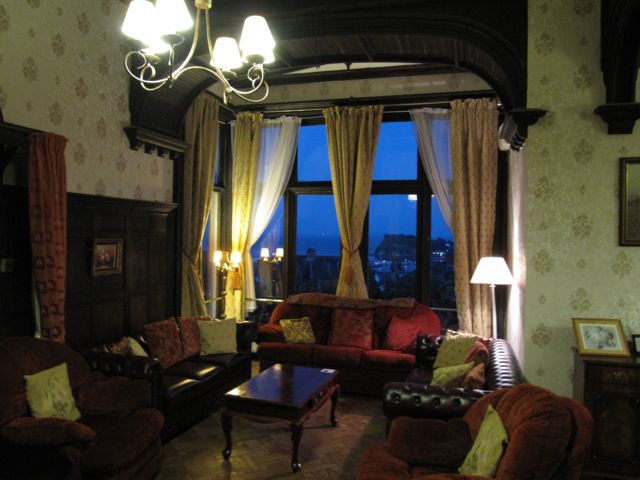
I remember being stopped by customs on the way back from a holiday in France, and the look of disbelief on their faces when they saw the shells and stones I had collected. Nearly every seaside holiday I've had has been spent this way.
I haven't been to the coast for a while, and so I am looking forward to it all. I don't care if it is raining, hailing or force 9 galing, I shall be walking along the beach, bags in hand, collecting shells, glass, driftwood and stuff.
The last time we went to Devon, my daughter was only about five or so, and I remember we walked along the beach at Westward Ho! and it was literally heavenly... it was sunny but very windy, and there was hardly anyone else on the long beach. The colours were muted and there was a very peaceful energy there, despite the wind.
This time we're renting a house in Teignmouth, which is somewhere I used to come with my grandparents. It's going to be *wonderful*. I've been living apart from my sons for more than a year, and so the prospect of seeing them every day is also very exciting for me.
I have started to make lists of things to take with me, and things we need to buy, lists of meals to make and stuff to have. But at the moment, I can only think about being close to the sea.
Saturday, July 14, 2012
A ramble on the state of society
I've been thinking a lot recently about our society. What sort of society we have, what sort of society we want, and what would the consequences be of a change in the way we organize ourselves?
The gap between the haves and have-nots has widened considerably in the past few years in the UK. I consider myself lucky, and when I read about gang deaths in inner city areas I feel just as alienated by them as when I read fashion articles in the newspaper and see people paying £300 for a dress. Both of those things are so far removed from my world that they don't seem to be part of my reality, even though I know £300 seems like a small amount to some people, and gangs and violence are simply a part of living to others.
In the UK there is still a class system. It's rather odd that most people think that the class system is a thing of the past. For a long time I felt classless, and believed that I could move within any strata of society without feeling above or beneath others, but nowadays I think that's completely unrealistic. In the past I have seen the monarchy as the lynch-pin for the whole system. More egalitarian societies seem to be run better without a monarchy, or with a monarchy which considers itself more ordinary, like the royal family in the Netherlands who take to a bicycle from time to time. I still see the monarchy supporting the whole caboodle here, but it is, of course, more than that, and involves the services, the schools and universities, and the way thing have always been done too. At its heart is a system which is protecting the status quo, resisting change... and so what we have to ask is whether what we have is worth protecting, or should be swept away.
I feel that it is a great shame that women haven't fought for a way to take control of the things that they would do differently. Not only do men have a fairly secure hold on commerce and politics, but they are also controlling the institutions which are traditionally the responsibility of women... wouldn't we tackle the drug problem differently, would we jail those who possess and are addicted to drugs? How would we handle prisons in general, wouldn't it look much more like the Swedish model than the British? The tragedy of the past 40 years of feminism is that women have been the worst offenders when it comes to belittling and devaluing the things which women traditionally took responsibility for... looking after people, raising children, being caring and nurturing rather than paternalistic and judgemental. It seems to me that a society which values only the male and not the female is an unbalanced society, and the sickness and violence that we see in our population are a result of that.
We all want to hold tight to our bit of turf, our possessions, our right to our castles, when actually, we all know that giving brings more pleasure than taking, and doing things for other people makes us feel much better than doing things for ourselves. Caring for others and reaching out to them feels so much better than grabbing what we can for ourselves. It has to be cohesive and coherent, though.
The big problem I have with David Cameron's Big Society is that what the government is doing at the moment in cutting the incomes of disabled and ill people is not caring and inclusive. How in hell he expects people who are not capable of work to obtain money if the government cuts their money off, I do not know. Some of them will have to throw themselves on the mercy of charities, but others will have a stark choice between starving and crime. I want my society to look after the vulnerable and old, and I do not want private companies brought in to decide that people with terminal illness or lifelong disabilities are fit for work when they are not. I want a caring society, and this isn't it. In the past revolutions, the problem has been that the new system of government and organization has been forced upon people against their will. To reach the goal of a caring society without that, one would have to convert people and make them desire it, and be willing to make sacrifices in order to achieve it. Would that be an impossible task? I don't know.
I sense a change in the way that people think about these things, and a desire for things to improve for everyone. How that is to be achieved is a question. There is a movement which aims to return humanity to a form of communism, providing welfare for all and removing the right to possessions. I see that doomed to failure because it assumes that we are all the same, and we are not. No system of organizing humanity which doesn't recognize our individuality is going to succeed. Money is at the heart of our system at present, the need to obtain money in order to obtain all the other things which people need... shelter, food, energy, clothing. What would the result of removing money from the equation be, I wonder from time to time? If we provided the basic necessities of life and allowed people to do what they wanted otherwise? People assume that everyone would become indolent and stop working, but I wonder how true that would be. Some people aspire to the life of living on the couch watching daytime tv, but I can't think that's many people, or for long. It's boring. On the other hand, sometimes it has only been the need for money that has got me out of bed on a cold morning. I have usually done jobs I liked, and which I enjoyed, but even though I am not strongly motivated by money to do a good job, I am motivated to keep doing it by the money that I have earned... ok I am confusing myself now.
Maybe we can think of ways to set up self-supporting systems... for example, building in small units for elderly people alongside schools or colleges, and giving brownie points to children or young people who help the elderly...building multi-purpose schools which can become community centres or health centres if the birth rate goes down...rearranging our cities and towns to enable people of all ages to help each other. Giving them places to meet and spend time together. I don't know any of the answers, but I do know that we can't go on as we are... there have to be some changes to the way that we do things... the current system has too many casualties, too many people addicted to drink and drugs, too many homeless or living in terrible conditions, too many young men alienated from education and their families.
In the UK there is still a class system. It's rather odd that most people think that the class system is a thing of the past. For a long time I felt classless, and believed that I could move within any strata of society without feeling above or beneath others, but nowadays I think that's completely unrealistic. In the past I have seen the monarchy as the lynch-pin for the whole system. More egalitarian societies seem to be run better without a monarchy, or with a monarchy which considers itself more ordinary, like the royal family in the Netherlands who take to a bicycle from time to time. I still see the monarchy supporting the whole caboodle here, but it is, of course, more than that, and involves the services, the schools and universities, and the way thing have always been done too. At its heart is a system which is protecting the status quo, resisting change... and so what we have to ask is whether what we have is worth protecting, or should be swept away.
I feel that it is a great shame that women haven't fought for a way to take control of the things that they would do differently. Not only do men have a fairly secure hold on commerce and politics, but they are also controlling the institutions which are traditionally the responsibility of women... wouldn't we tackle the drug problem differently, would we jail those who possess and are addicted to drugs? How would we handle prisons in general, wouldn't it look much more like the Swedish model than the British? The tragedy of the past 40 years of feminism is that women have been the worst offenders when it comes to belittling and devaluing the things which women traditionally took responsibility for... looking after people, raising children, being caring and nurturing rather than paternalistic and judgemental. It seems to me that a society which values only the male and not the female is an unbalanced society, and the sickness and violence that we see in our population are a result of that.
We all want to hold tight to our bit of turf, our possessions, our right to our castles, when actually, we all know that giving brings more pleasure than taking, and doing things for other people makes us feel much better than doing things for ourselves. Caring for others and reaching out to them feels so much better than grabbing what we can for ourselves. It has to be cohesive and coherent, though.
The big problem I have with David Cameron's Big Society is that what the government is doing at the moment in cutting the incomes of disabled and ill people is not caring and inclusive. How in hell he expects people who are not capable of work to obtain money if the government cuts their money off, I do not know. Some of them will have to throw themselves on the mercy of charities, but others will have a stark choice between starving and crime. I want my society to look after the vulnerable and old, and I do not want private companies brought in to decide that people with terminal illness or lifelong disabilities are fit for work when they are not. I want a caring society, and this isn't it. In the past revolutions, the problem has been that the new system of government and organization has been forced upon people against their will. To reach the goal of a caring society without that, one would have to convert people and make them desire it, and be willing to make sacrifices in order to achieve it. Would that be an impossible task? I don't know.
I sense a change in the way that people think about these things, and a desire for things to improve for everyone. How that is to be achieved is a question. There is a movement which aims to return humanity to a form of communism, providing welfare for all and removing the right to possessions. I see that doomed to failure because it assumes that we are all the same, and we are not. No system of organizing humanity which doesn't recognize our individuality is going to succeed. Money is at the heart of our system at present, the need to obtain money in order to obtain all the other things which people need... shelter, food, energy, clothing. What would the result of removing money from the equation be, I wonder from time to time? If we provided the basic necessities of life and allowed people to do what they wanted otherwise? People assume that everyone would become indolent and stop working, but I wonder how true that would be. Some people aspire to the life of living on the couch watching daytime tv, but I can't think that's many people, or for long. It's boring. On the other hand, sometimes it has only been the need for money that has got me out of bed on a cold morning. I have usually done jobs I liked, and which I enjoyed, but even though I am not strongly motivated by money to do a good job, I am motivated to keep doing it by the money that I have earned... ok I am confusing myself now.
Maybe we can think of ways to set up self-supporting systems... for example, building in small units for elderly people alongside schools or colleges, and giving brownie points to children or young people who help the elderly...building multi-purpose schools which can become community centres or health centres if the birth rate goes down...rearranging our cities and towns to enable people of all ages to help each other. Giving them places to meet and spend time together. I don't know any of the answers, but I do know that we can't go on as we are... there have to be some changes to the way that we do things... the current system has too many casualties, too many people addicted to drink and drugs, too many homeless or living in terrible conditions, too many young men alienated from education and their families.
Friday, July 06, 2012
125 years of James Wigg Practice
 It isn't often I am invited along to a 125th birthday party. The James Wigg Practice celebrated 125 years yesterday at a party at Kentish Town Health Centre. There were speeches by Frank Dobson, Alan Bennett and Roy MacGregor, as well as past partners of the practice. There was music, cakes, tea, ice cream and entertainment, balloons and displays.
As if on cue, the terrible weather of the past few weeks broke open the sunshine for the event, and a warm and sunny afternoon. It was an extremely enjoyable, well-organized and interesting event.
It isn't often I am invited along to a 125th birthday party. The James Wigg Practice celebrated 125 years yesterday at a party at Kentish Town Health Centre. There were speeches by Frank Dobson, Alan Bennett and Roy MacGregor, as well as past partners of the practice. There was music, cakes, tea, ice cream and entertainment, balloons and displays.
As if on cue, the terrible weather of the past few weeks broke open the sunshine for the event, and a warm and sunny afternoon. It was an extremely enjoyable, well-organized and interesting event.
Thursday, July 05, 2012
Jaywalking around the world

I had a friend from the Netherlands staying with me for a couple of weeks. He smokes, and I like to visit the charity shop, and so we combined a trip up the road. When we got to the complicated road traffic junction which has to be crossed to get to the parade of shops we were going to, I saw that there was no traffic approaching and crossed even though the pedestrian light was showing a red man.
There was Dutch muttering behind me, and it was clear that he felt I had taken an unnecessary risk. On discussing whether I had, in fact, taken risks with his life, he accused me of breaking the law, and said that in the Netherlands such behaviour could lead to a €90 fine. He made the assumption that the law was the same in the UK. It isn't.
In the UK pedestrians, and not cars, are assumed to have the right of way, and commonsense prevails. If you jump out in front of a car and cause an accident, you will be held to account for that behaviour... both drivers and pedestrians are required to behave with respect for other users of the road. But on the other hand, if you can see that you can safely cross, despite the pedestrian signal being red, you are allowed to do so.
Dear reader, the point of this blog post is to warn that things do not work that way in the rest of the world. In the US in many states, pedestrians are required to respect the traffic signals, and in many states the vehicles, and not pedestrians, have the major right of way.
This incident made sense of something that happened to me twenty years ago in Germany, too. I was in Hamburg, in a park which was intersected by roads. There was a pedestrian crossing over the road, and I dutifully went there, but being able to see for about 500 yards either way that there was nothing coming, I crossed the road, to angry shouts in German from my fellow pedestrians.
I *thought* that it was simply the German love of rules which made them shout at me, and that they were saying I should respect the red man symbol, even if the road was entirely clear, but I now realize they may have been telling me that I could be fined or arrested for my "crime".
I had always thought that jaywalking was crossing the road in a dangerous fashion, perhaps weaving in and out of cars etc... but it seems that I am assuming that other jurisdictions have the same sort of commonsense common law that I am used to. They don't. Crossing when the little red man is showing, or a "don't walk" sign of any sort is showing, is an offence in many countries, even if every car in the vicinity is up on blocks with no tyres. You can be arrested.
To my surprise, both Australia and New Zealand have heavy financial penalties for not observing the little red man, and in Singapore you may be imprisoned. It therefore pays to find out the local laws regarding pedestrians wherever you travel. A NZ$ 4000 fine for an adult or NZ$180 for a child may put a bit of a hole in your spending money!
Sunday, June 03, 2012
Jubilee Sunday

Source: uk.reuters.com via Fee on Pinterest
It's June 3, Jubilee Sunday, and the rain is falling softly outside my window. It rained torrentially last night and the road was flooded on our way back from my brother's pizza and beer party. It isn't raining hard this morning, but that soft penetrating rain is falling, which soaks you through. It's much colder than it has been for a while, a day for fires and cardigans inside.
My mother has gone to bed, feeling tired from two late nights after late meals and sleeping badly. My nephews stayed overnight and she got up early and made them pancakes while they forced her to watch wrestling on the tv and fought over the computer, but she looked worn out and rather grey-faced when they left, and I told her to go to bed and rest, and she did. She's looking forward to the Diamond Jubilee flotilla thing, but the pictures from the Guardian's website make the crowds look bedraggled and thin on the ground so far.
Maybe it's a bit early, it doesn't start until 2.30pm, and I suppose that people may have put off leaving in view of the weather. I imagine a nationwide searching of cupboards under the stairs for cagoules and waterproofs, wellies and umbrellas. Really, it's an old fashioned English summer... raining gently.
I have mixed feelings about the Jubilee. I don't believe in an hereditary monarchy, notwithstanding the fact I have traced my family back to Edward III. It seems to be mostly sentimentality: if anyone suggested we should have an hereditary prime minister, or Council Leader, or doctor, or dentist, people would rebel. It's the fact that an accident of fate meant that we had our revolution and then lost our way and begged the monarchy to come back, which has left us in this situation. I wonder if they feel threatened by the gradual eroding of the hereditary peers and the changing of the house of Lords?
I don't wish the family any harm, but I don't think they should still be there. I consider them an anachronism, a puppet group who have very little to do with anything, people we think we know and wheel out when anything with pomp and circumstance is required, like performing monkeys. In fact they are our very own zoo of royal animals, required to perform to order when we choose to enact one of the ancient rituals, like the state opening of parliament or this jubilee. Feeling this way, it doesn't seem appropriate or necessary to celebrate the fact that Elizabeth Windsor is still breathing after all these years. But of course people talk of the events that have punctuated their lives, and in England, the celebrations associated with Monarchs are one of the things people remember.
It's complicated by the fact that so many people do celebrate the royal family and drink up any reports of their doings as voraciously as the accounts of film stars: our own posh family reality show, still going after all these years. People assign real meaning to pieces of metal pinned to their chests, or arbitrary titles assigned by the action of the monarch in touching them on the shoulders with a sword.
It's always seemed weird to me that the Queen should assign a lot of titles to her children - Charles has a dozen spurious titles granted by his mother. Why bother? If you are the son of the monarch and heir to the throne then you can give yourself any stupid title you might wish to have, so why bother with any at all? Why not stick to "prince"? It bemuses me. As a Quaker I ought not to recognize any of the titles, should stick to Elizabeth Windsor and Charles Windsor, and I know that many of the Quakers have written to both refusing to acknowledge any other title.
My children have actually been deprived of more than royal celebrations. I refused to go to or look at the Millennium Dome, as I considered it a dubious waste of money, and I retain that view. I'd have spent the money in burying all the miles of overhead electricity cables. In the end, I think that might have been the cheaper option, and it would have been a legacy worth having, I think. I refused to celebrate the millennium when the rest of the country did, as they celebrated on January 1, 2000, which was the last year of the previous millennium and not the first of the new one, as there is no year zero in our calendar. That annoyed me a lot. Perhaps I am just an old curmudgeon and would rather grumble than celebrate?
Anyway, I may not be a monarchist, but I do have empathy for other people, and thus I am sorry that they are soggily awaiting the flotilla of ships on the Thames in the rain. I think that those who choose to watch it will definitely get a better view on television than in person, but of course they cannot be said to be a part of the event in the same way as someone who queues and pushes and experiences the real life drip of rainwater down the back of the neck. I feel sorry for the many organizers of street parties, urgently trying to organize shelter to avoid a washout. Hopefully the rain will stop, but it shows no sign of doing so. But then, maybe it's what we English do best, resilience in the face of adversity. Maybe the tales will be better, more interesting, for it not being a warm June day of sunshine. Maybe.
Postscript: I may not be a monarchist, but I can still deplore the treatment of elderly people. How was this a thank you to the monarch- making her stand in the cold and wet for such a very long time. I should think she thinks we hate her, poor thing.
Tuesday, May 29, 2012
Letter to Women's hour on hearing their discussion today about schools
Dear Woman's Hour,
My reason for contacting you was the rather dismissive tone with which home education has been referred to already in the course of the programme about schools. My experience in home education/unschooling over the past twelve years has taught me that it offers a far better, more rounded education than any school. It isn't the measure of last resort that you implied.
I think parents should be supported in the choices they make for their children... by choosing to home educate I lost the financial assistance of my education authority... I saved them around £2000 a year per child (over the course of their home education that amounts to around £68,000) but was then expected to pay all costs forever, including entering any exams, myself. I think the system in Canada which gives parents an educational allowance and allows parent to choose where to put that, is far, far, fairer.
I also think that feminism in the UK has become a movement which tries to propel women into working at a career outside the home, instead of supporting the full range of choices, which includes the choice to stay at home to look after pre-school or children who are of compulsory educational age. The original suffragettes were campaigning for equal value to be assigned to the work which was traditionally the work of women, and instead it has become devalued and women are often the ones who are devaluing it.
In your programme it was implied that an after-school club would offer children care, like an interested and involved parent. No, it *won't*! An involved and caring parent will be able to set the things that they do with a child into the context of that child's history. They will be able to interpret and make sense of the world for the child, with that knowledge behind them. It is also highly unlikely that the ratio of children to carer is as high as it is likely to be at home. Having an interested parent involved in an activity is likely to provide much more educational value than a paid carer will be able to provide.
It seems obvious that it will provide more benefit to a deprived child whose parents are not interested in their children... but I don't think it sounded as though any of the parents you interviewed in connection with that segment fell into that category.
I worked for ten years in the city and had a good career before I had my children. I believed that a woman of value should have a career and was convinced by my teachers in the 1970s that no intelligent female would want to be "just" a wife and mother. I intended to return to work.
I have worked, but part-time and from home since I discovered that I adored motherhood and wanted to be at home with my children. I enjoyed every moment of it.
I know that not all women are like me, but a substantial proportion (80%) in several research studies have said that they would prefer to have the means to stay at home with their children than to leave them in the care of others. When I wrote to a national newspaper to talk about how little status we have in our society, as stay at home mothers, I was inundated with letters of agreement from other women who desperately wanted to be able to stay with their babies.
I feel severely let down by feminism, which seems to see the fight as a race to leave someone else doing the childcare or education, instead of a fight to give women free choices, and the support to do what she feels is right for herself, her family, her children.
It is interesting to note that Dutch women are apparently the happiest in the world, and that 60% of Dutch women with or without children, are working part time.
It is also interesting to note that the research in the UK and Canada shows that it is the children from homes in the lower socio-ecnomic area who benefit most from home education. Children from families who would be expected to fail in formal educational institutions do better in home education, and the difference in expected performance outstrips children from middle class families. It always astonishes me that the mainstream education industry seems uninterested in the differences between schools and the alternatives, and what they may learn from them.
If we were paying parents who want to, to stay at home with their children, properly supporting part-time work for parents who want it, and offering parents a free choice about how they spend a universal educational allowance, I believe that it would go a long way towards solving many of the problems which our society is suffering from today. It would help youth unemployment (by freeing up jobs), it would support parents who want choices about their child's care and education, and it would strengthen the bonds in families, potentially preventing children from slipping into gangs or bullying cultures.
yours with feeling
I think parents should be supported in the choices they make for their children... by choosing to home educate I lost the financial assistance of my education authority... I saved them around £2000 a year per child (over the course of their home education that amounts to around £68,000) but was then expected to pay all costs forever, including entering any exams, myself. I think the system in Canada which gives parents an educational allowance and allows parent to choose where to put that, is far, far, fairer.
I also think that feminism in the UK has become a movement which tries to propel women into working at a career outside the home, instead of supporting the full range of choices, which includes the choice to stay at home to look after pre-school or children who are of compulsory educational age. The original suffragettes were campaigning for equal value to be assigned to the work which was traditionally the work of women, and instead it has become devalued and women are often the ones who are devaluing it.
In your programme it was implied that an after-school club would offer children care, like an interested and involved parent. No, it *won't*! An involved and caring parent will be able to set the things that they do with a child into the context of that child's history. They will be able to interpret and make sense of the world for the child, with that knowledge behind them. It is also highly unlikely that the ratio of children to carer is as high as it is likely to be at home. Having an interested parent involved in an activity is likely to provide much more educational value than a paid carer will be able to provide.
It seems obvious that it will provide more benefit to a deprived child whose parents are not interested in their children... but I don't think it sounded as though any of the parents you interviewed in connection with that segment fell into that category.
I worked for ten years in the city and had a good career before I had my children. I believed that a woman of value should have a career and was convinced by my teachers in the 1970s that no intelligent female would want to be "just" a wife and mother. I intended to return to work.
I have worked, but part-time and from home since I discovered that I adored motherhood and wanted to be at home with my children. I enjoyed every moment of it.
I know that not all women are like me, but a substantial proportion (80%) in several research studies have said that they would prefer to have the means to stay at home with their children than to leave them in the care of others. When I wrote to a national newspaper to talk about how little status we have in our society, as stay at home mothers, I was inundated with letters of agreement from other women who desperately wanted to be able to stay with their babies.
I feel severely let down by feminism, which seems to see the fight as a race to leave someone else doing the childcare or education, instead of a fight to give women free choices, and the support to do what she feels is right for herself, her family, her children.
It is interesting to note that Dutch women are apparently the happiest in the world, and that 60% of Dutch women with or without children, are working part time.
It is also interesting to note that the research in the UK and Canada shows that it is the children from homes in the lower socio-ecnomic area who benefit most from home education. Children from families who would be expected to fail in formal educational institutions do better in home education, and the difference in expected performance outstrips children from middle class families. It always astonishes me that the mainstream education industry seems uninterested in the differences between schools and the alternatives, and what they may learn from them.
If we were paying parents who want to, to stay at home with their children, properly supporting part-time work for parents who want it, and offering parents a free choice about how they spend a universal educational allowance, I believe that it would go a long way towards solving many of the problems which our society is suffering from today. It would help youth unemployment (by freeing up jobs), it would support parents who want choices about their child's care and education, and it would strengthen the bonds in families, potentially preventing children from slipping into gangs or bullying cultures.
yours with feeling
Friday, May 04, 2012
George Barnett: Bewitched
New video by George Barnett, which appears to have been shot in one go... not sure if that is just me being hypnotized by the skill of the person who shot the video. He plays all the instruments, wrote the song, sings it and stars in the video. He's *so* talented, *so* thin, and so young and energetic... I'd have been lying on the pavement waiting for the paramedics to arrive after one verse!
Please watch the video:
Subscribe to:
Posts (Atom)